
Selecting the best Gym Equipment manufacturers in 2026 requires more than comparing catalog prices. Global buyers need evidence of engineering quality, factory capacity, compliance, service, and long-term reliability.
Industry demand remains substantial. The Health & Fitness Association reported about 184 million members across 72 markets in its 2024 Global State of the Health & Fitness Industry report. EuropeActive and Deloitte recorded 67.6 million European fitness members and €31.8 billion in market revenue during 2023. These figures show continued investment in commercial gyms, hotels, residential clubs, rehabilitation centers, and connected training spaces. They also reveal a practical challenge: membership growth does not guarantee equal equipment demand in every region.
Specifications matter.
ACSM’s Worldwide Survey of Fitness Trends consistently highlights wearable technology, strength training, functional fitness, and data-enabled exercise. Manufacturers must therefore support both familiar equipment and evolving digital expectations. A treadmill may look impressive in a showroom, yet its motor warranty, belt replacement process, software stability, and local technician network often determine its real value.
This guide evaluates leading manufacturers through a buyer-focused lens. It considers product range, manufacturing experience, quality control, certifications, customization, delivery capability, spare-parts support, and total cost of ownership. Public company information, industry reports, and practical purchasing criteria inform the assessment. However, market data is not perfectly comparable. Reporting methods differ between countries, and some manufacturer claims require independent verification. Buyers should still request testing records, reference installations, warranty terms, and documented compliance before signing contracts. In global procurement, the strongest supplier is rarely the cheapest. It is the partner that performs reliably after the equipment leaves the showroom.
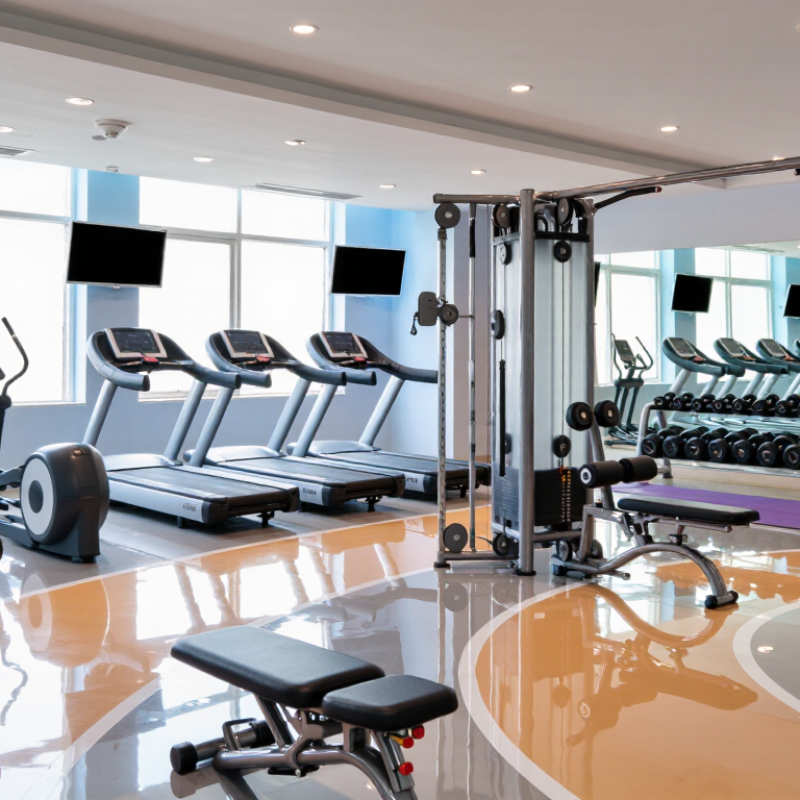
The global gym equipment market is forecast to grow at a 6.1% CAGR, creating wider opportunities for international buyers in 2026. This growth reflects stronger demand from commercial gyms, hotels, residential communities, and compact training studios. Yet market expansion does not guarantee better purchasing decisions. Equipment must match local user habits, available floor space, climate conditions, and service capacity.
Durability will remain a central buyer priority. A treadmill placed in a busy club may operate for ten hours daily, while a home unit faces very different demands. Buyers should review frame materials, motor ratings, safety systems, warranty terms, and replacement-part availability. Test reports and clear technical drawings also reduce misunderstandings between suppliers and importers. Small details matter.
Digital compatibility is gaining importance, but it should solve a real problem. Simple usage tracking may be more valuable than complicated software that staff rarely use. Energy efficiency, noise control, accessible controls, and ergonomic design also influence long-term operating costs. Compliance documentation for the destination market deserves careful checking before shipment. Forecasts can be imperfect, too. A 6.1% growth estimate may shift with currency changes, freight costs, construction activity, or changing consumer preferences. Experienced buyers should compare factory audits, sample performance, after-sales response times, and total ownership costs instead of choosing by price alone.
Manufacturer Types: Commercial, Home, Strength, Cardio, and Functional Systems
Commercial equipment manufacturers design for heavy daily use in hotels, clubs, schools, and training centers. Their machines usually feature reinforced frames, replaceable cables, sealed bearings, and clear maintenance access. Buyers should request cycle testing, load ratings, spare-part availability, and warranty terms before placing large orders. A low price can become expensive when one missing sensor stops an entire row of machines.
Home equipment manufacturers focus on compact dimensions, quieter operation, and simpler assembly. I have found that folded treadmills and adjustable benches often need more floor space than catalog images suggest. Measure doorways, ceiling height, and storage clearance. Small details matter. Check noise levels, user weight limits, electrical requirements, and video assembly instructions. Some attractive home products feel less stable during repeated high-intensity use.
Strength manufacturers typically produce racks, benches, cable stations, plates, and selectorized machines. Look for tested welds, accurate hole spacing, protective finishes, and realistic weight capacities. Cardio manufacturers need to prove belt durability, flywheel balance, cooling performance, and console reliability. Functional-system manufacturers combine pulleys, suspension points, storage, and modular attachments for varied training. This flexibility is useful, but poorly planned layouts can create crowded walkways. Request drawings, inspection records, sample units, and references from comparable facilities. No specification sheet replaces hands-on testing.
For global gym-equipment buyers, safety compliance is a purchasing requirement, not a decorative certificate. The Global Wellness Institute valued the physical-activity economy at approximately $1.06 trillion in 2022. Demand is expanding, but careless sourcing can create costly safety gaps. Paperwork is not performance.
Manufacturers should map each machine against ISO 20957 and applicable EN ISO 20957 requirements. EN 957 references may still appear in older files, so buyers should verify the current standard and transition status. ASTM standards provide useful testing methods for materials, durability, guarding, and user protection. However, ASTM compliance alone may not satisfy every destination market. CE marking indicates conformity with applicable European requirements; it is not a universal quality certificate. Request the EU Declaration of Conformity, technical file summary, risk assessment, test reports, and traceability records.
A practical 2026 compliance check should include load testing, pinch-point inspection, emergency-stop verification, cable fatigue testing, labeling, and instruction review. Inspect one production sample, not only a laboratory report. The World Health Organization reported that 31% of adults worldwide were insufficiently active in 2022, increasing the importance of safe, accessible equipment. A certificate can look complete and still hide weak maintenance guidance. Buyers should also confirm applicable national rules, current standard editions, factory quality controls, and post-sale spare-part availability. Some checks remain imperfect, especially when documents describe prototypes rather than production units.
Global buyers need more than a polished catalog when selecting gym equipment manufacturers. The 2024 HFA Global Report recorded more than 200,000 fitness facilities worldwide, showing the scale of recurring equipment demand. However, large demand does not guarantee reliable delivery. Ask for the exact MOQ by product, color, and configuration. A mixed container may reduce inventory pressure, but custom upholstery can increase the MOQ.
Lead time should be written as 30–60 calendar days, not “fast delivery.” Request production milestones, inspection dates, and shipping documents. The World Bank’s 2023 Logistics Performance Index highlights continuing differences in customs efficiency and shipment reliability across markets. Therefore, a factory near a major port may still need contingency planning. Keep buffer stock. It is not wasteful.
Warranty terms require careful reading. A strong offer specifies coverage for frames, cables, electronics, labor, and replacement parts. Ask how service claims are handled after installation. Response time matters. Spare-part availability matters more. ISO 9001 certification can support process confidence, but it cannot replace production records or customer references. I would inspect welded joints, test moving components, and review failure data from similar installations. That process takes time. Still, a low price with unclear service may become the most expensive choice. No supplier scores perfectly; buyers should record risks, challenge optimistic promises, and revise their evaluation after every shipment.
Selecting gym equipment manufacturers in 2026 requires more than comparing catalog photos. Quality should be verified through material specifications, weld inspection, load testing, and documented quality-control procedures. Ask for production samples, not only digital renders. In real projects, small details matter: smooth cable movement, reinforced adjustment points, accurate weight stacks, and protective packaging. A factory may look impressive, yet its inspection records can be incomplete. That deserves a second review.
Production scale affects delivery reliability. Check monthly capacity, equipment categories, peak-season schedules, minimum order quantities, and backup suppliers for critical components. Pricing should include tooling, customization, inland transport, export packaging, duties, and replacement parts. The lowest quotation is rarely the lowest landed cost. Request a written warranty policy and clear acceptance standards. Export reach also matters. Experienced manufacturers should provide consistent commercial invoices, packing lists, shipping documents, installation guidance, and destination-market compliance support.
Tips: Compare at least three factories using the same specification sheet. Ask for recent production photos, inspection reports, and customer references from similar regions. Test one sample under realistic use before approving a larger order. Leave room for uncertainty; freight rates, raw material costs, and port delays can change quickly. A reliable partnership is built through transparent answers, measurable quality, and honest discussion of limitations.
| Manufacturer Profile | Main Production Region | Core Product Categories | Typical Annual Output Capacity | Quality Management Indicators | Common Compliance Documentation | Typical Export Reach | Indicative FOB Pricing Position | Customization Capability | Recommended Buyer Type |
|---|---|---|---|---|---|---|---|---|---|
| Profile A — High-Volume Strength Equipment Producer | East and South China manufacturing clusters | Power racks Benches Weight plates Cable machines | 20,000–60,000 units per year | ★★★★☆ Automated tube cutting, robotic welding, powder coating, incoming material inspection, and batch testing. | ISO 9001 may be available; product test reports and material declarations should be requested for each product range. | North America, Europe, the Middle East, Southeast Asia, Australia, and Latin America. | Low to mid-range FOB pricing | High: frame colors, upholstery, logos, carton artwork, dimensions, and accessory combinations. | Importers, distributors, commercial gym chains, and private-label buyers. |
| Profile B — Commercial Cardio Equipment Specialist | Eastern China and coastal industrial zones | Treadmills Ellipticals Exercise bikes Rowing machines | 8,000–30,000 units per year | ★★★★☆ Motor endurance testing, belt alignment checks, electrical safety testing, noise testing, and final-load inspection. | CE-related technical files may be available for applicable markets; buyers should verify EMC, electrical safety, RoHS, and local requirements. | Europe, North America, Gulf countries, Southeast Asia, Africa, and selected South American markets. | Mid-range FOB pricing | Medium to high: console language, display functions, frame finish, software interface, and packaging. | Hotel groups, fitness clubs, rehabilitation centers, and regional distributors. |
| Profile C — Premium Connected-Fitness Manufacturer | Western Europe, North America, and selected Asian technology hubs | Connected treadmills Indoor cycles Digital strength systems Training platforms | 3,000–15,000 units per year | ★★★★★ Structured design verification, software validation, electrical safety controls, supplier audits, and documented service procedures. | Market-specific electrical, EMC, cybersecurity, privacy, and safety documentation may be available; confirmation is required before purchase. | North America, Western Europe, Japan, South Korea, Australia, and selected premium markets. | High FOB pricing | Limited to medium: configuration, finish, user interface, integration, and selected private-label programs. | Premium gyms, corporate wellness operators, medical fitness facilities, and hospitality groups. |
| Profile D — European Modular Strength Equipment Producer | Central and Southern Europe | Selectorized machines Plate-loaded equipment Functional trainers Benches | 5,000–20,000 units per year | ★★★★★ Engineering drawings, controlled weld quality, corrosion-resistant finishing, load testing, and documented production traceability. | EU technical documentation, applicable safety assessment records, material specifications, and factory quality procedures may be available. | European Union, United Kingdom, Middle East, North Africa, North America, and selected Asia-Pacific markets. | Mid-high to high FOB pricing | Medium: color selection, upholstery, modular configurations, attachments, and project-specific layouts. | Premium clubs, university facilities, public-sector projects, and specification-led buyers. |
| Profile E — Cost-Efficient Asian OEM/ODM Supplier | South Asia and Southeast Asian industrial zones | Home gym systems Benches Dumbbells Basic cardio | 10,000–40,000 units per year | ★★★☆☆ Standardized assembly checks, dimensional inspection, coating checks, and pre-shipment sampling; process depth varies by factory. | Basic product test reports may be available; buyers should independently confirm material safety, electrical, packaging, and market-entry requirements. | South Asia, Africa, the Middle East, Southeast Asia, and value-focused Latin American markets. | Very competitive FOB pricing | High for mechanical products: dimensions, colors, packaging, logos, and product bundles. | Online retailers, value distributors, start-up fitness brands, and small-to-medium importers. |
| Profile F — Heavy-Duty Free-Weight and Metalwork Specialist | North America, Eastern Europe, and Asian metalworking centers | Olympic bars Weight plates Power racks Storage systems | 15,000–80,000 units per year | ★★★★☆ Steel-grade control, dimensional checks, weld inspection, coating thickness checks, and static-load testing. | Material certificates, load-test reports, packaging specifications, and market-specific documentation may be supplied on request. | North America, Europe, Australia, Japan, the Middle East, and international sports-institution projects. | Low to mid-range for standard products | Medium to high: knurling, finishes, plate designs, frame dimensions, storage layouts, and branding. | Strength gyms, sports academies, military facilities, schools, and home-fitness distributors. |
| Profile G — Project-Based Contract Fitness Supplier | Multi-region sourcing networks with regional assembly capability | Full gym packages Cardio Strength Flooring and accessories | Project capacity: 20–200 complete facilities per year | ★★★★☆ Equipment specification control, site planning, installation supervision, commissioning records, and after-sales coordination. | Product-level supplier documentation is normally compiled per project; certificates must be verified for the final equipment list and destination country. | Middle East, Africa, Central Asia, Southeast Asia, Europe, and emerging commercial fitness markets. | Mid-range project pricing | High at project level: equipment mix, floor plan, colors, signage, delivery scheduling, and installation scope. | Developers, hotel operators, government tenders, universities, and multi-site gym operators. |
| Profile H — Rehabilitation and Medical-Fitness Equipment Producer | Western Europe, North America, and specialized Asian production centers | Rehabilitation bikes Low-impact treadmills Assessment systems Therapeutic strength equipment | 1,000–8,000 units per year | ★★★★★ User-safety analysis, controlled product validation, calibration procedures, ergonomic testing, and formal service documentation. | Medical-device or general fitness classification depends on intended use and jurisdiction; buyers must verify applicable regulatory status. | North America, Europe, Australia, Japan, South Korea, and established healthcare markets. | High FOB pricing | Low to medium: accessory configuration, software settings, upholstery, and facility-specific integration. | Hospitals, physiotherapy clinics, medical fitness centers, universities, and senior-care operators. |
Presidio Golf Course
300 Finley Road @ Arguello Gate
San Francisco 94129
P: 415.561.4661
MAP IT