
Choosing the best kids golf clubs in 2026 starts with fit, not flashy colors or a long list of accessories. A club that is too long or heavy can make a young player struggle to swing naturally. The right size depends on a child’s height, strength, coordination, and experience—not age alone. Fit matters most.
This guide will explain what to check in junior sets, from flexible shafts and lightweight heads to comfortable grips and useful club selection. A beginner may need only a few forgiving clubs, while a regular player might benefit from a fuller set. Look for clear sizing guidance, durable construction, and a return policy that allows room for growth. A chart can help, but it cannot capture every child’s swing. That part takes judgment.
We’ll also compare common set types and price ranges, and point out features that matter more than branding. A qualified golf instructor or club fitter can offer helpful feedback, especially when a child is between sizes. Still, no set is perfect for every young golfer. Personal preference can be surprisingly hard to predict. The goal is a safe, comfortable setup that encourages practice without making the game feel like homework.
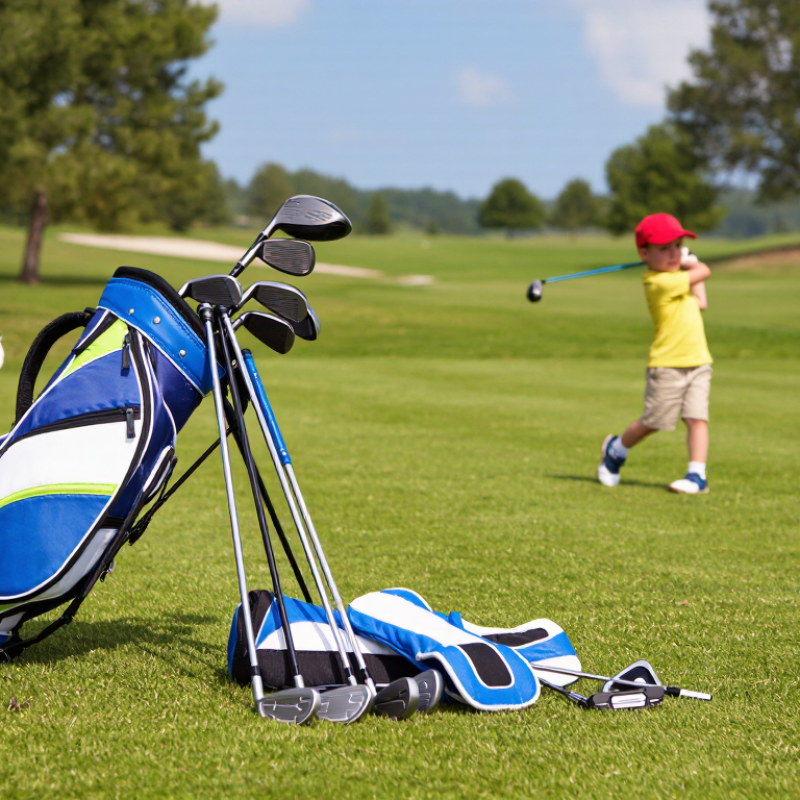
What Are the Best Kids Golf Clubs in 2026?
How Kids’ Golf Clubs Differ from Adult Clubs
Kids’ golf clubs are designed around a smaller player, not simply shortened adult equipment. A lighter club can help a child swing without fighting the weight. Shorter shafts make it easier to stand comfortably and find the ball. Grips are usually thinner, so small hands can hold the club without squeezing hard. Flex matters, too. A shaft that is too stiff may make a smooth swing feel awkward. Too much weight can turn practice into a chore.
Tips: Have your child hold a club in a normal stance. Check that the sole rests near the ground and the grip feels secure. Watch a few relaxed swings, not just one perfect shot. Avoid buying clubs much too long for a child to “grow into”; poor fit can encourage uncomfortable habits.
Sets for young golfers often contain fewer clubs than adult sets. That keeps choices manageable and the bag lighter to carry. The right selection depends on a child’s height, strength, coordination, and interest in playing. Age charts can offer a starting point, but children grow at different rates. A fitting may reveal that a shorter or lighter option works better, even when a chart suggests otherwise. And fit can change quickly. Check it again as the child grows.
The best junior set is one that fits a child’s height, strength, and swing—not simply their age. Height ranges below are general fitting guides; club-length charts vary by manufacturer.
| Buying dimension | Junior clubs | Adult clubs | What to look for in 2026 |
|---|---|---|---|
| Fit and club length | Shorter shafts are designed for a child’s height and posture. Sets are commonly grouped by height or age, with height generally the more useful starting point. | Standard adult lengths are built around adult proportions and may be too long for many children. | Check the maker’s height chart and have the child address the ball naturally. Avoid buying a much longer set for a child to “grow into.” |
| Weight and swing speed | Typically lighter overall, helping smaller players swing and control the club more comfortably. | Often heavier, with weight and shaft options intended for adult strength and swing characteristics. | Choose a club the child can swing smoothly several times without strain; lighter is not automatically better if control suffers. |
| Shaft flex and material | Many junior sets use lightweight graphite shafts, which can be easier for developing players to swing. | Adult clubs come in a wider range of shaft materials, weights, and flexes to suit different players. | Prioritize manageable weight and consistent contact. Shaft labels alone do not determine fit; the child’s swing and club length matter too. |
| Grip size | Smaller grips are sized for children’s hands and can make it easier to hold the club without excessive squeezing. | Adult grips may feel too large for a young player’s hands. | Check that the child can hold the club comfortably and maintain control. Do not rely on age alone to choose grip size. |
| Set composition | Often sold as a small, simple set—commonly a putter, wedge, iron, and wood or hybrid—with the number of clubs increasing in some sets for older juniors. | Adult sets may contain more clubs and a broader range of specialized options. | For a beginner, a few well-fitting clubs are usually more practical than a full set. Confirm which clubs are included before comparing prices. |
| Loft and forgiveness | Junior woods and hybrids are often designed to help players launch the ball; a larger, forgiving head can be helpful for developing contact. | Adult options span a wide range of head designs and lofts for different swing speeds and skill levels. | Look for easy-to-hit designs and a suitable loft, rather than choosing a club based only on distance claims. |
| Choosing a set by player stage | A short starter set suits many first-time golfers; a more complete junior set may suit a taller, stronger child who plays regularly. | Adult sets are generally appropriate only when the player’s body size, strength, and club fit support adult-length equipment. | For the best fit, compare the child’s measurements with a current junior sizing chart and, where possible, test a club with a qualified fitter. |
| Growth and replacement | Children can outgrow clubs, so fit may need to be checked again as their height and strength change. | Adult clubs are less often replaced because of height changes, though skill and fitting needs can still evolve. | Recheck posture, grip, and swing comfort periodically. Avoid sacrificing current control for extra shaft length. |
Note: Junior club specifications and recommended height ranges differ among manufacturers. Use the specific set’s fitting chart and treat age-based labels as a rough guide.



The Presidio Golf Course is
a Presidio Trust Initiative.