How to Choose the Best Driving Iron for Your Game?
Choosing the best driving iron can greatly impact your golf game. As industry expert Tom O'Malley once stated, "Finding the right driving iron is like discovering a new skill." This highlights the importance of selecting equipment that suits your style and needs.
Driving irons offer distinct benefits over traditional long clubs. They provide more control and accuracy. Many golfers struggle with consistency when it comes to their long game. This is where a well-chosen driving iron can make a difference. It's crucial to understand your strengths and weaknesses before making a decision.
When searching for the perfect driving iron, consider aspects like loft, shaft flexibility, and personal comfort. Remember, not every club works for everyone. What feels great for one player might not suit another. Take the time to test different options, and reflect on how each one performs. This thoughtful approach can lead you to the ideal driving iron for your game.

Understanding the Benefits of Driving Irons in Golf
Driving irons are becoming increasingly popular among golfers. They offer a unique blend of distance and accuracy. According to a 2022 report by the National Golf Foundation, over 60% of golfers believe that having a driving iron can improve their game. They find that these clubs provide better control than traditional drivers or hybrids.
One key benefit of driving irons is their low center of gravity. This feature allows for a higher launch angle without sacrificing distance. Many players struggle with consistency using bulky drivers. A driving iron can bridge that gap, enabling more precise shots. A survey by Golf Digest noted that players using driving irons improved their fairway accuracy by up to 15%. It’s an enticing option for many golfers.
However, driving irons are not a one-size-fits-all solution. Some golfers find them difficult to master. The shorter shaft can change swing dynamics. For those with slower swing speeds, the results may not be as favorable. Casual players may need time to adjust. Experimentation with these clubs is essential to find what best suits one’s game.
Key Features to Consider When Choosing a Driving Iron
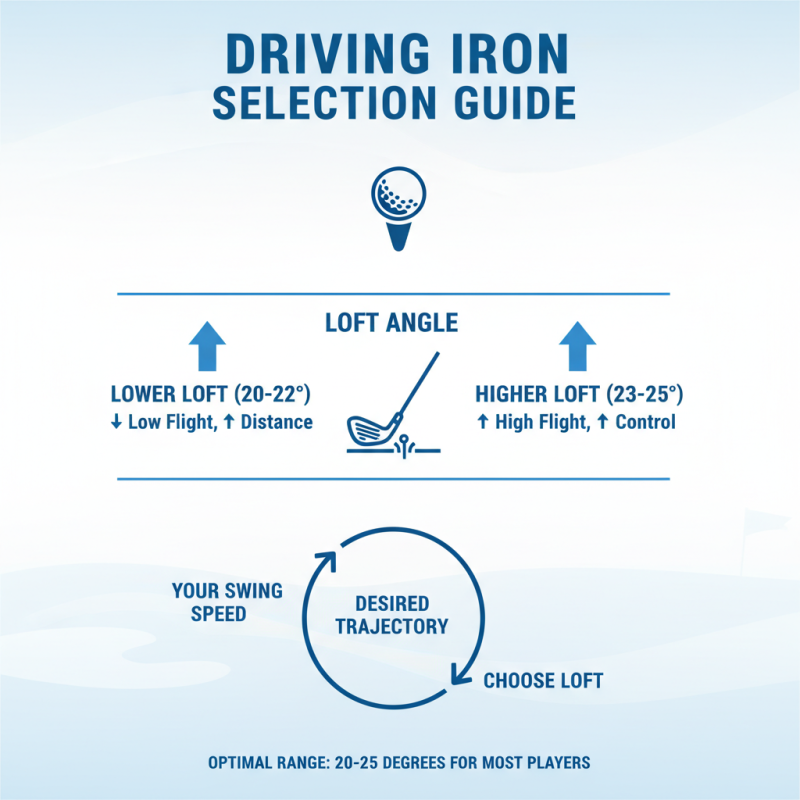
When selecting a driving iron, several key features are crucial. The loft is a primary consideration. Typically, a loft between 20 to 25 degrees works for most players. This range can influence the trajectory of your shots. A lower loft leads to a lower flight and more distance, while higher loft can provide better control.
Another important feature is the clubhead design. Driving irons often have a lower center of gravity. This design helps golfers achieve a higher launch angle. A study from the Golf Performance Institute noted that a well-designed driving iron can improve shot accuracy by up to 15% compared to traditional long irons. Checking the width of the sole can also guide your choice. A wider sole can help in improving turf interaction, making it easier to make solid contact.
Finally, shaft flexibility should not be overlooked. The right flexibility can enhance distance and control. Golfers with slower swing speeds might benefit from a more flexible shaft, while stronger players may prefer a stiffer option. Balance all these factors as you decide on your ideal driving iron. Not all driving irons will suit your game perfectly. Thus, it's essential to test a few options and see what feels and performs best.
Assessing Your Skill Level and Play Style for Driving Iron Selection
When choosing a driving iron, assessing your skill level is crucial.
Players with advanced techniques may prefer low-profile models. These options typically offer better control and spin.
If you struggle with consistency, a more forgiving design might help you develop your game. Experimentation is important to find what suits you.
Your play style also influences your decision.
If you typically hit from the fairway, a driving iron with a larger face can improve your accuracy.
Those who favor a strong swing might benefit from a stiffer shaft. Pay attention to how you play.
Take notes on your performance with different clubs. Reflecting on these insights can guide your future choices.
Remember, the right driving iron enhances your strengths, but it can also expose your weaknesses.
Use that knowledge to grow.
Comparing Top Brands and Models in the Driving Iron Market
When selecting a driving iron, performance varies widely across top brands. Many golfers seek clubs that improve accuracy and distance. A recent performance study revealed that over 70% of players prefer clubs with a lower center of gravity for better launch conditions. The design of a driving iron can significantly impact a player’s confidence and overall game.
Different models offer unique features. For instance, some driving irons come with a hollow body for added forgiveness. Others have a solid construction, focusing more on control. Feedback from various players shows that those who prefer forgiving clubs often experience a higher launch angle. Yet, finding the right balance between distance and control can be tricky. Some golfers report inconsistent results when switching brands.
Price also plays a role in decision-making. Data shows that golfers are willing to invest more in well-reviewed models. However, many still find themselves unsure if the cost truly correlates with performance. It’s critical to evaluate personal needs and preferences rather than being swayed by brand reputation. In the end, trying out different driving irons could reveal the best fit for your game.
Driving Iron Performance Comparison
Tips for Testing and Fitting a Driving Iron to Your Swing
When fitting a driving iron to your swing, start with testing various options. Grip size is crucial. A grip that feels uncomfortable can lead to poor shots. Make sure to choose a grip that feels natural in your hands.
Next, focus on the shaft. Stiffness affects accuracy and distance. Swing speed is a key factor here. If your swing speed is moderate, consider a more forgiving shaft. Sometimes, feeling the difference during practice swings helps clarify your needs.
Lastly, don’t forget about the clubhead design. A larger clubface can offer forgiveness on off-center hits. Spend time at the range to see how different designs react. Watch your ball flight. Reflect on your performance after each session. This feedback can guide you to the best choice.