
Choosing Gray Suit Fabric in 2026 involves more than matching a color to a fashion forecast. The right cloth must balance comfort, structure, durability, and personal style. A charcoal suit can look formal under office lighting, while a medium gray fabric feels softer in outdoor settings. Small differences matter.
This guide examines wool, wool blends, recycled fibers, and newer performance textiles. It considers weight, weave, breathability, wrinkle resistance, and surface texture. A 250-gram wool fabric may suit mild climates and long business days. A heavier flannel offers warmth and visual depth, but it can feel uncomfortable in heated rooms. Your daily environment matters.
Professional tailors usually assess fabric in natural light, not only beneath showroom lamps. Run your hand across the surface. Check whether the cloth springs back after gentle pressure. Inspect the label for fiber content, mill information, and care instructions. Responsible sourcing and recognized textile certifications can also support a more reliable purchase.
There is no perfect fabric.
Personal experience still exposes weaknesses. A highly breathable cloth may wrinkle faster than expected. A durable blend may lack the rich drape of fine wool. Even expert recommendations can miss your climate, posture, or cleaning habits. This article will compare practical options and explain where each Gray Suit Fabric performs best. The goal is not to follow every 2026 trend. It is to choose a fabric that remains comfortable, credible, and useful after the first impression fades.
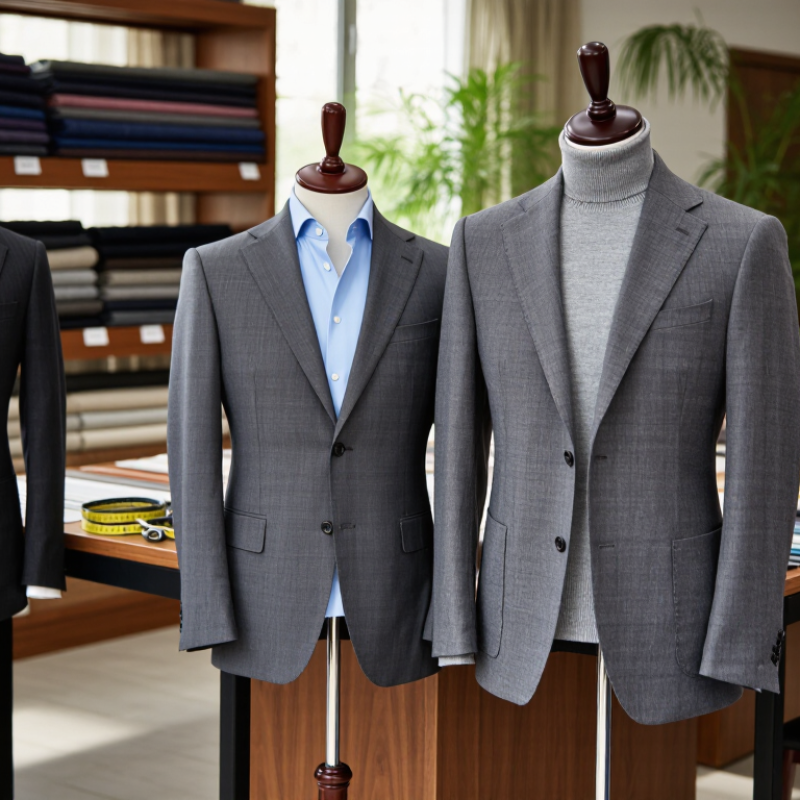
Choosing gray suit fabric in 2026 starts with understanding fiber, weave, weight, and climate performance. Textile Exchange’s Materials Market Report 2024 estimates global fiber production reached 124 million tonnes in 2023. Polyester represented the largest share, while wool remained a small but valuable category. This matters because fiber volume does not equal comfort or tailoring quality.
Wool offers natural elasticity, breathability, and a clean drape. Fine wool feels smooth against the neck, but it can show wear faster at the elbows. Worsted wool creates a sharper surface, while flannel feels warmer and softer.
Linen releases heat quickly and develops visible creases. Cotton feels familiar, though it usually holds a less structured silhouette. Synthetic blends can improve durability and recovery, but some fabrics may feel warmer indoors. The International Wool Textile Organisation reports that wool represents less than 1% of global fiber supply, making its performance especially distinctive.
Fabric weight changes the suit’s behavior. A lightweight gray cloth may suit humid commutes, but it can wrinkle easily. Midweight cloth often balances drape, durability, and year-round use. Check the weave under direct light. A tight weave usually resists abrasion better. Pinch the fabric, release it, and watch its recovery. Small details matter.
I once judged a fabric by softness alone. That was a mistake. Soft cloth can lose shape quickly. Ask for a sample, bend it, and inspect the reverse side. Industry reports guide the choice, but your commute, office temperature, and maintenance habits should decide it.
How to Choose Gray Suit Fabric in 2026?
Fabric weight should match your climate, not just the calendar. In hot, humid cities, choose gray wool around 220–260 gsm with a plain weave or high-twist construction. It allows more airflow and dries faster after a crowded commute. For mild spring and autumn weather, 260–300 gsm offers useful balance. In cold, windy regions, 300–360 gsm provides better insulation and shape retention. A heavier cloth can still feel comfortable when the weave remains breathable.
Check the fabric’s GSM, not only its marketing name. ASTM D3776 provides a recognized method for measuring textile mass. Ask the tailor or supplier for this figure. Textile Exchange’s Materials Market Report 2024 estimated wool represented roughly 1% of global fiber production in 2023. That scarcity makes careful sourcing and construction especially important. Recycled wool blends may reduce waste, but performance depends on fiber length and finishing.
Wearing conditions change the answer. A daily commuter may need a resilient 260–290 gsm cloth, especially when sitting, driving, and carrying a shoulder bag. For occasional office use, a softer fabric can work, even if it wrinkles sooner. That is the trade-off. I once favored lighter gray cloth for summer and underestimated air-conditioned offices. A thin undershirt helped, but a 250 gsm open weave would have been wiser. Inspect the suit under daylight. Gray can reveal shine, creasing, and uneven texture quickly.
| Climate or Wearing Condition | Recommended Fabric Weight | Suitable Season | Recommended Fiber or Blend | Useful Weaves and Finishes | Comfort and Performance | Gray Shade Direction | Care and Practical Notes |
|---|---|---|---|---|---|---|---|
| Hot, humid conditions; outdoor commuting; limited air conditioning | 180–220 g/m² 5.3–6.5 oz/yd² | Late spring to summer | Lightweight wool, wool–linen, or wool–mo hair blends | High-twist plain weave, tropical wool, open hopsack | Best airflow and lower heat retention; linen blends may wrinkle more quickly | Light gray or medium gray to reduce the visual impact of heat and dust | Choose half lining or breathable lining where appropriate; allow the suit to air after wear |
| Warm, dry weather; business travel; normal indoor activity | 220–260 g/m² 6.5–7.7 oz/yd² | Spring and summer | 100% lightweight wool or a wool–silk blend | Plain weave, fresco-style high-twist weave, lightweight twill | Balances breathability, crease recovery, and professional drape | Medium gray provides versatile contrast with white, blue, and pastel shirts | A strong all-purpose warm-weather range; avoid excessive compression in luggage |
| Temperate climate with changing temperatures | 260–300 g/m² 7.7–8.9 oz/yd² | Spring and autumn | Superfine or standard worsted wool; optional small amount of stretch fiber | Worsted twill, serge, subtle birdseye, or hopsack | Versatile insulation and structure without feeling excessively heavy | Charcoal gray or mid-gray works well for offices and formal daytime events | Often the most adaptable range for a year-round business wardrobe in moderate climates |
| Cool offices, mild winter, and frequent indoor-to-outdoor transitions | 300–340 g/m² 8.9–10.0 oz/yd² | Autumn to winter | Worsted wool, wool–cashmere, or wool–mohair blends | Medium twill, flannel, or structured birdseye | Improved warmth, shape retention, and resistance to light wind | Charcoal, graphite, or deep slate gray gives a polished, formal appearance | Suitable for regular office use; use a breathable overcoat rather than excessive suit layering |
| Cold, dry winter; low to moderate outdoor exposure | 340–400 g/m² 10.0–11.8 oz/yd² | Winter | Wool flannel, wool–cashmere, or dense wool serge | Brushed flannel, heavy twill, cavalry twill, or melton-like finishing | Higher warmth and a fuller drape; less suitable for heated indoor environments | Charcoal and dark gray absorb less visual attention from winter dust than very pale gray | Use a substantial hanger and allow longer airing time; brushing helps remove surface dust |
| Windy or damp conditions; walking between transportation and buildings | 280–360 g/m² 8.3–10.6 oz/yd² | Autumn and winter | Worsted wool or tightly spun wool with a modest natural water resistance | Compact twill, high-twist twill, or tightly woven serge | Better wind protection and crease recovery than very open weaves | Medium charcoal or textured gray can conceal minor marks and surface variation | Wool is naturally moisture-resistant but is not waterproof; dry promptly and avoid high heat |
| Frequent travel; long days; repeated sitting and standing | 240–300 g/m² 7.1–8.9 oz/yd² | Most seasons except very cold winter | High-twist worsted wool; optional low-percentage stretch blend | Plain weave, high-twist twill, or travel-oriented open weave | Good wrinkle recovery, durability, and moderate breathability | Mid-gray or charcoal with a subtle texture hides light creasing better than flat solid cloth | Pack trousers with minimal folding; hang the suit immediately after arrival |
| Formal evening events in a moderate or cool venue | 260–340 g/m² 7.7–10.0 oz/yd² | Year-round, adjusted for local climate | Fine worsted wool or wool–mohair blend | Smooth twill, barathea, or refined plain weave | Clean surface, controlled sheen, and a formal silhouette | Dark charcoal is more formal; medium gray is better for daytime versatility | Check venue temperature before choosing heavier cloth; avoid highly reflective finishes for conservative settings |
| High physical activity, cycling commute, or extended standing | 200–260 g/m² 5.9–7.7 oz/yd² | Late spring and summer | High-twist wool, wool–mo hair, or breathable wool blend | Open hopsack, tropical weave, or lightweight fresco-style construction | Better ventilation and resilience, though very lightweight cloth may show more movement and wrinkles | Medium gray or gray with a subtle mélange effect is practical for frequent wear | Prioritize mobility, breathable shirt fabrics, and a well-ventilated jacket construction |
| One-suit wardrobe for a moderate climate | 260–300 g/m² 7.7–8.9 oz/yd² | Most of the year | 100% wool in a versatile worsted construction | Worsted twill, hopsack, or subtle birdseye | Strong balance of comfort, drape, durability, and styling flexibility | Medium gray is the most adaptable choice for business, travel, and smart-casual combinations | Pair with black, brown, or burgundy footwear; rotate wear to extend garment life |
Your intended use should determine the gray shade before you consider fabric weight. Light gray suits spring weddings, office travel, and warm climates because it reflects more daylight. Medium gray offers the widest range. It works with brown loafers, black oxfords, and understated knitwear. Charcoal gray looks sharper for interviews, evening events, and formal business settings. It can feel too severe in bright summer light.
I usually test gray fabric beside my face, not under showroom lighting. Daylight reveals unwanted blue or green undertones. A cool gray can flatter pink or ruddy complexions, while warmer gray often suits golden or olive undertones. This is not a fixed rule. I still misjudge sometimes. Your shirt, tie, and skin tone can change the result dramatically.
Fabric choice should support repeated wear. The Business of Fashion and McKinsey’s State of Fashion 2025 report found that 80 percent of surveyed executives expected fashion conditions to remain flat or worsen. That pressure makes versatile tailoring more practical. Choose midweight wool for frequent use, with enough structure to recover after sitting. WRAP’s Valuing Our Clothes report estimates that extending a garment’s active life by nine months can reduce its carbon, water, and waste footprints by 20–30 percent. A gray shade you genuinely enjoy wearing matters. A theoretically perfect suit can still stay forgotten in the closet.
Gray suit fabric must balance durability, comfort, and easy maintenance. Textile Exchange’s Materials Market Report 2024 estimates global fiber production reached 124 million tonnes in 2023. Polyester represented about 57% of total output, showing why synthetic blends remain common in tailoring. A 90% wool and 10% polyester blend usually resists wrinkles better than pure wool. It also handles frequent commuting more confidently. However, polyester can feel warmer against the skin and may hold odors after long wear.
For comfort, fine wool remains a strong choice. Its natural crimp helps regulate temperature and gives gray fabric a softer drape. A small amount of elastane, around 2% to 4%, improves movement at the shoulders and knees. Too much stretch can make trousers lose shape. That is easy to overlook. In my fitting experience, a medium-gray wool blend with a firm weave performs better than a very soft, loosely woven cloth for weekly office use.
Maintenance affects real durability. Air the suit overnight after wearing it, then brush the fabric gently. Use steam for light creases, but avoid pressing directly on the surface. WRAP’s Valuing Our Clothes report found that extending garment life by nine months can reduce carbon, water, and waste footprints by about 20%. Frequent dry cleaning is not always necessary. Follow the care label, and question any fabric that needs professional cleaning after every wear.
How to Choose Gray Suit Fabric in 2026?
Fabric quality should be judged by more than softness. In a showroom, rub the cloth gently and inspect its recovery after folding. A dense wool fabric usually resists wrinkles better than a loose, shiny blend. The International Wool Textile Organisation reports that global wool production remains near 1.1 billion kilograms annually, making wool a limited resource rather than a disposable choice. Fine merino can feel smooth, but excessive fineness may reduce practical durability. I have made that mistake before.
Fiber content also affects value. Textile Exchange’s Materials Market Report 2024 states that global fiber production reached 124 million tonnes in 2023, with polyester representing about 57 percent. A small percentage of recycled or synthetic fiber can improve crease resistance and reduce cost. Too much may create a plastic shine under office lighting. Check the label, then check the fabric in daylight.
Fit deserves equal attention because even expensive cloth looks careless when the shoulders collapse. Try the jacket with a shirt, sit down, and lift your arms. The sleeve should reveal a narrow strip of cuff without pulling at the chest. For budget planning, compare cost per expected wear, not only the purchase price. WRAP’s clothing research found that extending a garment’s life by nine months can reduce its environmental impacts by roughly 20–30 percent. Still, durability is not guaranteed. Alteration quality, cleaning habits, and changing body measurements can quietly decide whether a gray suit earns its value.
Comparing common gray suit fabric options by quality, fit suitability, budget, and long-term value.
Scores use a practical 1–10 benchmark based on typical fiber behavior, fabric weight, wrinkle resistance, breathability, tailoring versatility, and expected service life. Four-season wool offers the strongest overall balance, while wool-polyester blends generally provide the lowest initial cost and easiest maintenance. Actual performance varies with weave, finishing, construction, and care.
Presidio Golf Course
300 Finley Road @ Arguello Gate
San Francisco 94129
P: 415.561.4661
MAP IT