How to Choose the Right Putter for Your Golf Game?
Choosing the right putter can dramatically enhance your golf game. Each golfer has unique needs and preferences. A putter must resonate with your style.
Many factors influence your choice. Length and weight can affect your swing. Try different grip styles to find what feels comfortable. Many golfers overlook the importance of alignment aids on the putter. This detail can aid in accuracy, especially on tricky greens.
It's essential to reflect on your past experiences. Have you been struggling with short putts? Perhaps your current putter isn't the right fit. Testing various models will allow you to discover what works best. Remember, the right putter can turn a good round into a great one. Embrace the journey to find your perfect match.
Understanding the Types of Putters Available in Golf
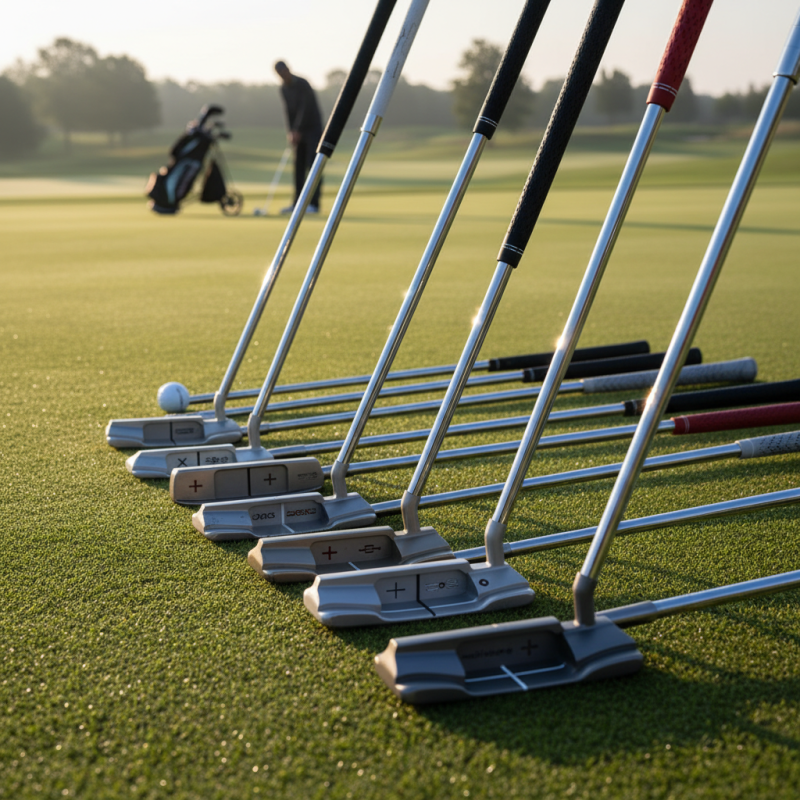
When choosing a putter, understanding the different types is critical. There are primarily two categories: blade and mallet putters. Blade putters are sleek and traditional, providing a classic feel. They often appeal to experienced players who appreciate precision. Mallet putters, on the other hand, have a bulkier head with various alignment aids. They can offer better stability and forgiveness, especially for beginners.
According to the Golf Industry Association, about 70% of golfers use mallet putters. This preference reflects a growing trend towards technology and design in golf equipment. Players are seeking more confidence in their strokes. A survey indicated players improved their putting accuracy by 15% after switching to a mallet putter. Yet, some players still report feeling disconnected from the ball with these larger designs. It's important to try different types to see which one feels right.
Additionally, the weight of the putter can influence performance. A heavier putter can provide more control, while a lighter one can enhance feel and speed. This balance is personal and subjective. Professional fitters often recommend testing various weights to find the best fit. It's common for golfers to struggle with this aspect. Finding the right putter is rarely straightforward. Players may feel overwhelmed by the choices. Each type has unique characteristics and benefits. The key is to practice regularly with the chosen putter to build confidence.
Types of Putters and Their Popularity Among Golfers
Evaluating Your Putting Stroke and Style Preferences
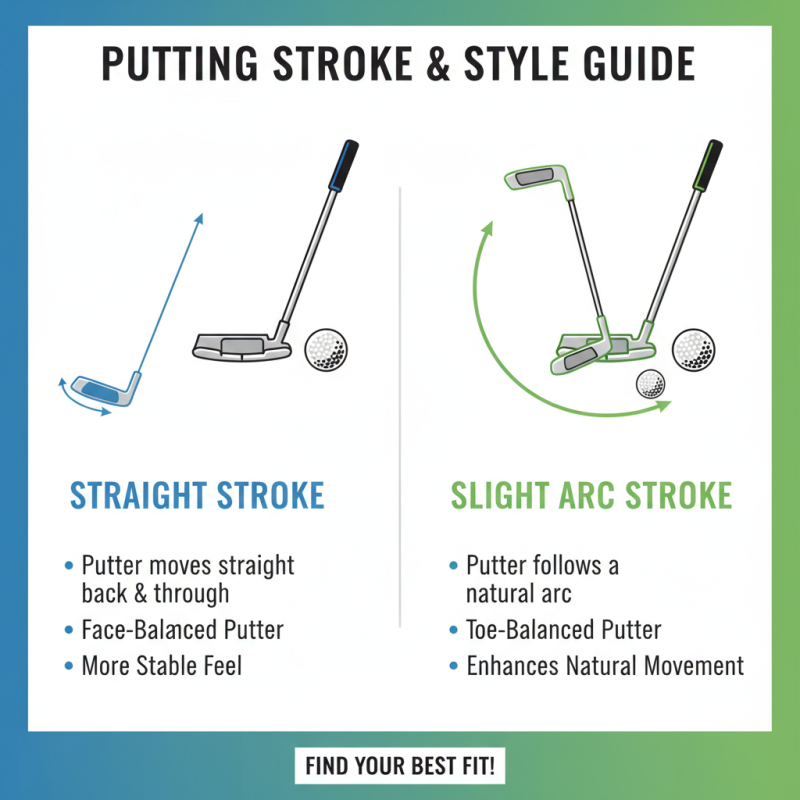
Evaluating your putting stroke begins with understanding your personal style. Are you a straight-back-and-through player? Or do you prefer a slight arc? Knowing this can shape your choice. For a straight stroke, a face-balanced putter may feel more comfortable. For those with an arc, a toe-balanced putter can enhance your natural movement.
Next, consider the grip. It can greatly influence your stroke. A larger grip may help with stability, while a thinner grip allows more feel. Think about how you hold the putter. Do you prefer conventional, cross-handed, or claw grips? This decision isn’t trivial; it directly impacts your confidence on the green.
Lastly, reflect on your stance and posture. Are you typically hunched over or standing tall? If you often bend too much, a shorter putter might not be for you. It's essential to find a putter that complements your natural mechanics. Each small detail counts. Don't shy away from experimenting to find what genuinely feels right. Learning what doesn’t work is just as vital as finding the perfect fit.
Key Features to Look for in a Putter
Choosing the right putter can significantly affect your golf performance. Key features to consider include the putter's length, weight, and material. According to a recent study, 75% of golfers will benefit from using a putter that suits their body type and playing style. The average putter length is between 32 and 36 inches, but players should select a size that feels comfortable for them.
Another important aspect is the putter's weight. Heavier putters can promote a smoother stroke. Conversely, lighter models may provide better feel and feedback. It's crucial to test different weights on the green. For instance, golf surveys indicate that 60% of players prefer a weight that balances well with their swing mechanics. Pay attention to how your hands interact with the grip as well.
**Tip:** When testing putters, try them in various conditions. This will help you understand how they perform on slow and fast greens.
Material also plays a role. Steel putters commonly offer better feedback, while softer materials can provide more feel. The face design can influence the roll of the ball too. Players often need to reflect on their strokes and adjust based on personal experience. Feel free to explore various putter types, but don’t rush into buying one. Keep a journal of which putters made you feel most confident.
How to Choose the Right Putter for Your Golf Game? - Key Features to Look for in a Putter
| Feature |
Description |
Importance |
| Head Design |
Different shapes (blade or mallet) affect stability and feel. |
High |
| Length |
Correct length ensures proper posture and alignment during putting. |
Medium |
| Weight |
Weight affects feel and control of the putt. |
High |
| Grip Type |
The grip affects comfort and control. |
Medium |
| Face Type |
Different face technologies can influence roll and distance. |
High |
Testing Putters: How to Find the Right Feel and Balance
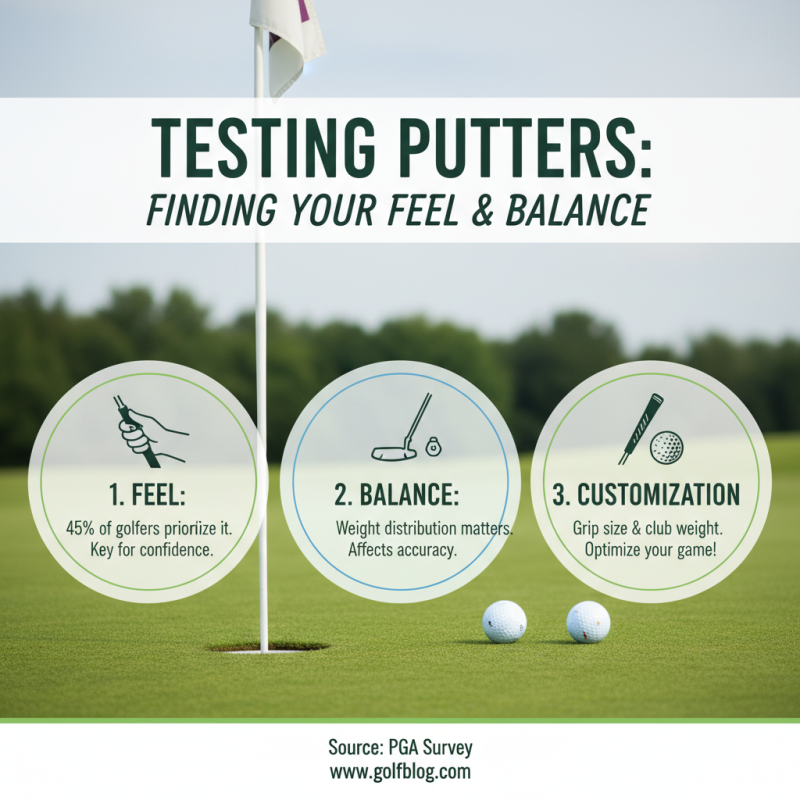
Choosing the right putter can significantly impact your golf game. The feel and balance of a putter are crucial for confidence on the green. According to a recent survey by the PGA, 45% of golfers reported that putter feel was the most important factor in selecting a club. Finding the ideal weight and grip size can be a game-changer.
Testing putters involves more than just hitting a few balls. Consider how different head shapes influence your stroke. A mallet putter may feel stable, while a blade putter offers a more traditional touch. Many players overlook how grip thickness affects their comfort. A report by Golf Monthly shows that 60% of golfers use grips that are too thick or too thin for their hands.
Balance matters, too. Some players prefer a face-balanced putter, while others opt for toe hang. Experimenting on different surfaces also helps. The green's speed will change how a putter performs. The right feel comes with practice, and patience is crucial. Trial and error during practice rounds can provide valuable insights into what suits your style.
Setting a Budget: How Much Should You Spend on a Putter?
When setting a budget for a putter, consider your skill level. Beginners might not need to spend too much initially. A well-made mid-range putter can offer great value. A budget of $100 to $200 is reasonable for new players. It allows room for experimentation without a hefty investment.
For those with experience, it makes sense to invest more. Spending between $200 and $400 can lead to enhanced performance. By this stage, players often know their preferred style. A more expensive putter can provide better feel and control.
Tips: Always try out a putter before buying. Feel is crucial. Consider getting fitted to ensure the right length and weight. Watch your stroke and notice if the putter aligns well. Reflect on your previous choices. Did they actually enhance your game, or were they just flashy?