
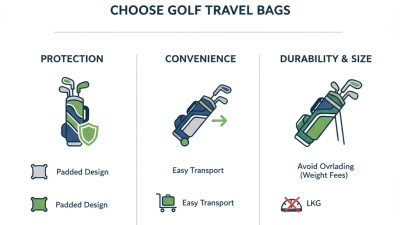
Choosing the right golf travel bag in 2026 means protecting more than clubs. It means getting your equipment through airports, car trunks, and hotel hallways without adding needless stress. The best option depends on how you travel, what you carry, and how often your clubs leave home. A roomy bag can feel reassuring, but extra space may make it awkward to lift or store. Small details matter. Check the padding around the club heads, the quality of the zippers, and whether the wheels roll smoothly over rough pavement. A bag that looks sturdy in a product photo may feel different when packed.
This guide explains how to compare golf travel bags using practical features, not just appearance or price. We’ll look at hard-shell and soft-sided designs, weight, capacity, handles, wheel systems, and useful extras such as internal straps. You’ll also find ways to match a bag to your travel habits, whether you fly several times a year or take occasional weekend trips. Measurements and airline policies can change, so verify current requirements before you book rather than relying on a general rule. There is no perfect bag for every golfer. I still find this choice less clear than it should be, especially when durability claims are difficult to compare. Focus on features you can inspect, realistic reviews, and the protection your own clubs need. Then choose a bag you can manage when it is fully packed.
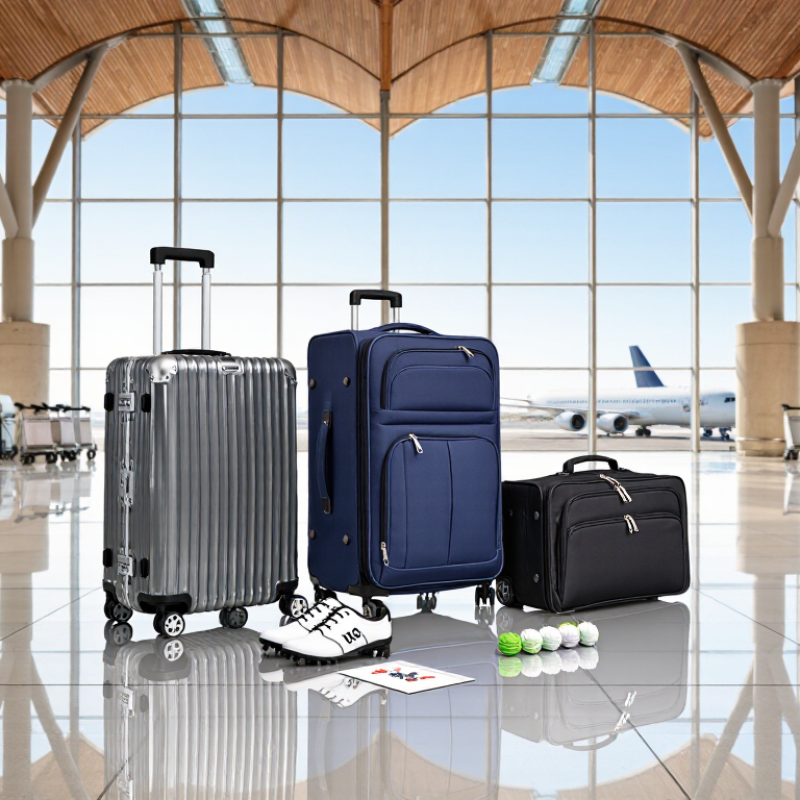
Start with the trip, not the travel bag. A short drive may call for compact storage, while frequent flights make padding, stable wheels, and easy handling more important. Think about how you travel through airports: will you manage the bag alone, lift it into a car, or move it across uneven pavement? Small wheels can feel fine indoors and awkward on rough sidewalks.
Measure your golf bag before comparing travel covers. Record its height, widest point, and depth, including pockets and attached accessories. Then measure the longest club with its headcover on. Compare those figures with the cover’s usable interior dimensions, not just its advertised exterior size. Leave a little room for padding. It matters.
Measurements can be surprisingly easy to misjudge. A tape measure may sag, and a soft bag can bulge once packed. Recheck the dimensions with clubs inside, and weigh the complete setup, including shoes or towels you plan to pack. Check your airline’s current oversized-baggage requirements before buying; limits and fees can vary. If you mostly travel by car, a bulky cover may take up more trunk space than expected. That trade-off is easy to overlook.
| Travel need | Typical equipment dimensions | Suggested travel-bag interior size | Protection and design priorities | What to check before buying |
|---|---|---|---|---|
| Occasional flight with a stand bag | Bag commonly about 34–36 in long and 9–10 in wide; measure the longest club in the bag. | At least 48 in long, with roughly 11–13 in of usable width and depth. | Padded club-head area, secure straps, and a base that protects the bag during handling. | Confirm the packed bag fits without forcing the zippers closed; use a support rod if appropriate. |
| Frequent air travel with a cart bag | Often about 35–37 in long, with a top diameter around 10–11 in; pockets can increase packed width. | About 49–52 in long and 13–15 in wide and deep, subject to the packed bag’s actual shape. | Reinforced top and base, internal compression straps, durable fabric, and smooth-rolling wheels. | Measure across the fullest pockets and check wheel and handle construction for repeated trips. |
| Longer clubs or an oversized driver setup | Club length varies; measure from the club’s heel to the end of the grip while it is in the bag. | Choose an interior length at least 2–3 in longer than the tallest packed club; many setups need 49–52 in. | Extra headroom, a protective top section, and room for a stiff-arm or similar club support. | Use the stated interior length, not only the exterior length; allow for curves and padding. |
| Road trip with extra clothing or shoes | Golf bag plus bulky pockets, shoes, rainwear, or small accessories. | Select a cover with expandable storage or spare capacity beyond the measured bag; avoid compressing club shafts. | Separate accessory pockets, sturdy grab handles, and a design that is easy to lift into a vehicle. | Check whether added pockets make the packed cover too wide for your vehicle’s trunk or storage area. |
| Lightweight, compact travel | A smaller stand bag with fewer accessories; packed width is usually lower than that of a full cart bag. | Match the interior closely to the measured bag while maintaining at least 2 in of length clearance. | Low empty weight, foldable construction, and enough padding around the club heads and base. | Compare the cover’s empty weight and folded size, and confirm that compact construction still protects the clubs. |
| Travel involving stairs or uneven ground | Any bag size; total packed weight and balance matter more than the cover’s empty dimensions. | Use the size needed for the packed golf bag, without choosing excess volume that makes carrying harder. | Padded carry handles, balanced placement of handles, reinforced seams, and optional backpack-style straps. | Test how the loaded cover lifts and carries; wheels may be less useful on stairs or rough surfaces. |
Sizing note: These are practical selection ranges, not universal standards. Measure your golf bag with its pockets loaded and clubs installed, then compare those measurements with the travel bag’s listed interior dimensions. Airline baggage size, weight, and handling rules vary, so check your carrier’s current policy before departure.





The Presidio Golf Course is
a Presidio Trust Initiative.