A good round begins long before the first tee. The right golf gear can make practice more comfortable, help you make informed club choices, and keep small problems from distracting you. Yet useful equipment is not the same as expensive equipment. A golfer carrying a well-fitted set, a few spare balls, tees, and a glove may be better prepared than someone with a bag full of gadgets.
Club designer Tom Wishon has emphasized the value of fit with the statement, “There is no such thing as a standard golf club.” That idea matters when choosing clubs: shaft length, flex, and grip should suit the player, not just the label. A qualified club fitter or PGA professional can help assess those choices. Small details matter. So do personal habits. A pushcart may suit a walker, while a lightweight carry bag may be more practical for someone who prefers fewer clubs.
This guide explores ten golf gear essentials, including clubs, balls, shoes, a bag, gloves, tees, a towel, and simple weather protection. It also considers practical tools such as a rangefinder, where local course rules and personal needs should guide the choice. No checklist fits every golfer perfectly. Some players forget a towel; others carry three tools they rarely use. The aim is a dependable setup that feels comfortable, works for your game, and leaves room to learn.
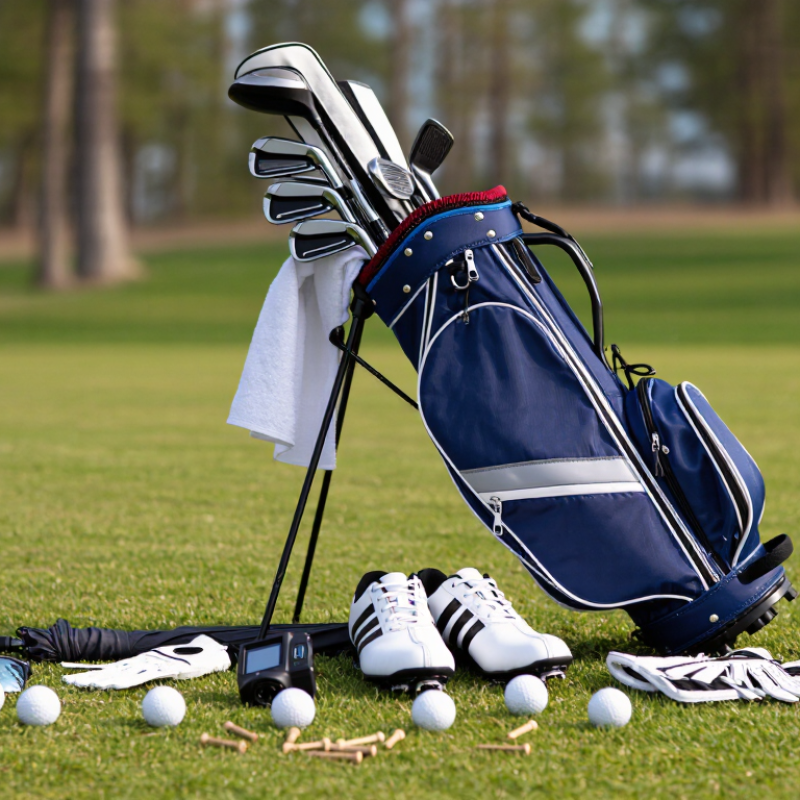
Golf clubs shape how you manage distance, height, and uneven lies. A useful starting set includes a driver, a few fairway or hybrid clubs, several irons, a wedge, and a putter. You do not need every club allowed in a full bag. Choose a mix that covers the shots you actually face and feels manageable in your hands.
Fit matters. A club that is too long or heavy can make solid contact harder, while the wrong grip size may affect control. During a fitting, notice whether the club sits comfortably and whether your usual swing produces repeatable contact. A launch monitor can help, but so can watching where shots land on a practice range. Small patterns matter.
Golf balls deserve the same attention. Different models vary in feel, spin, and distance, but a ball that performs consistently for your swing is often more useful than one chosen for a tour player’s needs. Try the same ball for several rounds and note your drives, approach shots, and putts. I would not judge it by one lucky shot; even careful testing has noisy days. Keep a few spare balls in your bag, and check them for cuts or scuffs after rough encounters.
A reliable golf setup starts with three small items: tees, a glove, and shoes that fit. The National Golf Foundation’s 2024 Golf Industry Report counted 28.1 million on-course golfers in the United States in 2023. That is a lot of rounds—and many chances for basic gear to make the day easier. Small details matter.
Carry tees in two lengths. Shorter ones suit many iron shots; longer tees help when your driver needs more room. Keep a few spares in a pocket, since they snap or disappear in soft ground. A glove should feel snug across the palm without pulling at the fingertips. If it bunches, grip pressure can creep up. Not glamorous. Replace it when the palm gets slick, not only when it looks worn.
Shoes deserve a careful fit check: walk in them, flex your toes, and test the heel for slipping. Traction helps on wet grass, but an aggressive sole is not automatically more comfortable. The best pair is the one you can wear through several hours without hotspots. Check the forecast, too; damp conditions expose weak grip fast. I’d still pack an extra glove. Forgetting one is an easy mistake, even with a tidy bag.
A golf bag should carry what you use, not everything you own. A lightweight stand bag suits walking rounds, while a cart bag offers more room for equipment. Check that the straps sit comfortably and pockets open without unpacking half the bag. Keep balls, tees, and a repair tool in easy reach. Too much gear gets heavy fast.
Apparel should respond to changing conditions. A breathable shirt helps on warm, humid days; a light waterproof layer can make a cool, drizzly round manageable. Choose trousers or shorts that allow a full swing, and wear a cap when the sun is strong. On windy mornings, an extra thin layer is useful. Still, it is easy to overpack clothing and carry pieces you never wear.
Tips: Check the forecast before leaving, then pack one practical spare layer. Keep a small towel clipped outside your bag for damp grips. After a round, air out wet clothes and empty muddy items. No setup is perfect; adjust it to your course and comfort.
| # | Essential Gear | What It Does | Practical Selection Tips | Conditions to Consider |
|---|---|---|---|---|
| 1 | Golf clubs | Provide the range of shots needed from the tee, fairway, rough, and green. | Choose clubs that suit your ability and swing; a standard set can include no more than 14 clubs during a round under the Rules of Golf. | Course length, terrain, and your typical shot distances can affect which clubs are most useful. |
| 2 | Golf balls | A ball is required to play; its construction can influence feel, distance, and short-game control. | Use a ball that matches your preferences and skill level, and carry several in case of lost or damaged balls. | Wet grass and water hazards may increase the chance of losing balls, so bring extras. |
| 3 | Tees | Support the ball for tee shots; they are also useful for marking a ball or repairing a small pitch mark when appropriate. | Carry a few different lengths to suit your clubs and preferred tee height. | Firm or soft ground can affect how easily a tee enters the turf. |
| 4 | Golf glove | Helps provide a secure grip, commonly worn on the lead hand. | Select a close fit without excess material at the fingertips or palm. | A spare glove can be useful in rain or humidity if the first becomes wet. |
| 5 | Golf bag | Organizes and carries clubs, balls, and other equipment around the course. | Choose a lightweight carry bag for walking or a cart-compatible bag if you usually ride; check for comfortable straps and practical pockets. | For wet-weather rounds, look for a rain cover and pockets that help protect valuables. |
| 6 | Golf shoes | Provide support and traction during the golf swing and while walking the course. | Prioritize a comfortable fit and stable sole; check the course's footwear rules before playing. | Water-resistant uppers can help in damp conditions; breathable footwear may be more comfortable in heat. |
| 7 | Weather-appropriate golf apparel | Allows comfortable movement while helping manage temperature and changing weather. | Choose flexible layers that allow a full swing, and check the course dress code in advance. | Light, breathable clothing suits warm weather; removable layers help when temperatures change. |
| 8 | Rain jacket or waterproof layer | Helps keep you dry and comfortable during showers. | Look for a lightweight layer that allows unrestricted shoulder and arm movement. | Check the forecast and pack rain protection when showers are possible; a compact option is easier to carry. |
| 9 | Hat or cap | Shields the face and eyes from sun and can help keep hair out of the way. | Choose a comfortable fit that stays secure while walking and swinging. | A brim is useful in bright sun; a warm hat can improve comfort in cold weather. |
| 10 | Towel and basic accessories | A towel helps clean clubs and hands; a ball marker and divot-repair tool support common on-course tasks. | Keep small accessories in an easy-to-reach pocket and use course-approved practices when repairing marks. | A damp towel can help remove dirt from clubfaces, while a dry section is useful for hands and grips. |
A rangefinder can make club selection less of a guess. Hold it steady, aim at the flag, and check the reading against visible course markers. Wind, uphill lies, and landing areas still matter; a number alone cannot choose your shot. Some devices include slope adjustments, so check the event rules before using that feature in competition. Small details matter.
Keep a ball marker in an easy-to-reach pocket. When another player’s line crosses your ball, mark its position before lifting it. A flat marker is less likely to catch a putter or shift underfoot. I sometimes forget to return mine to the same pocket, which is a small but avoidable distraction on the next green.
A divot tool helps repair pitch marks left by a ball landing on the green. Work gently around the mark and lift the edges toward the center; avoid tearing up the grass. It is not a fix for every blemish, but prompt, careful repairs help keep putting surfaces playable. After using it, check that the mark looks level rather than raised. These three tools are simple, yet they support smoother decisions and more considerate course play.
A golf round can mean hours in open sun, with little shade between tees. Carry a refillable bottle that seals tightly and fits in your bag’s side pocket. If the course has refill stations, top it up before the bottle runs low. Take small sips throughout the round rather than waiting until you feel thirsty. Small sips help. On especially warm days, plan extra water and take breaks in shaded areas when available.
Apply broad-spectrum sunscreen with SPF 30 or higher to exposed skin before heading out. Don’t miss the ears, back of the neck, and hands; these spots catch plenty of sun while you swing. Reapply about every two hours, and sooner after heavy sweating or toweling off, following the product label. A small tube in your bag makes reapplication easier, though it is surprisingly easy to forget. A cap and lightweight, sun-protective clothing add useful coverage, but they do not replace sunscreen on exposed skin. Check the forecast, too; cloudy skies can make sun protection feel less urgent than it is.
General on-course guidance: drink about 0.4–0.8 liters of fluid per hour, adjusting to conditions and your individual needs. Choose broad-spectrum SPF 30 or higher sunscreen and reapply at least every two hours, or sooner after heavy sweating.
The chart shows a general cumulative fluid-intake range for a four-hour round; hydration needs vary with heat, exertion, and sweat rate. Do not treat the upper value as a target for everyone.
Presidio Golf Course
300 Finley Road @ Arguello Gate
San Francisco 94129
P: 415.561.4661
MAP IT