Top 10 Non Powered Amusement Equipment Manufacturers
Non Powered Amusement Equipment may look simple: a swing frame, climbing net, slide, or rope bridge. Yet each structure must handle repeated use, changing weather, and the occasional hard landing. Choosing a manufacturer is therefore about more than appearance. Buyers also need to assess materials, installation support, maintenance access, and documented safety practices.
Industry reports help frame the market, but their limits matter. The TEA/AECOM Theme Index and Museum Index tracks attendance at major attractions; it does not rank equipment makers or measure non-powered equipment sales. The U.S. Consumer Product Safety Commission’s playground safety guidance and injury surveillance offer another useful reference. U.S. estimates have placed annual emergency-department visits associated with playground-equipment injuries near 200,000. That figure covers a broad category, not a specific product type or manufacturer. Context, not a scorecard.
This Top 10 guide compares manufacturers through practical criteria: product range, engineering information, customization, service, and evidence of quality control. It considers equipment for parks, schools, resorts, and family attractions, where a sun-heated slide or a worn climbing-rope connection can reveal details a catalog cannot. Public information differs between companies, so some comparisons remain imperfect. That deserves a closer look. Use the list as a starting point, then verify specifications, references, and local project requirements before making a decision.
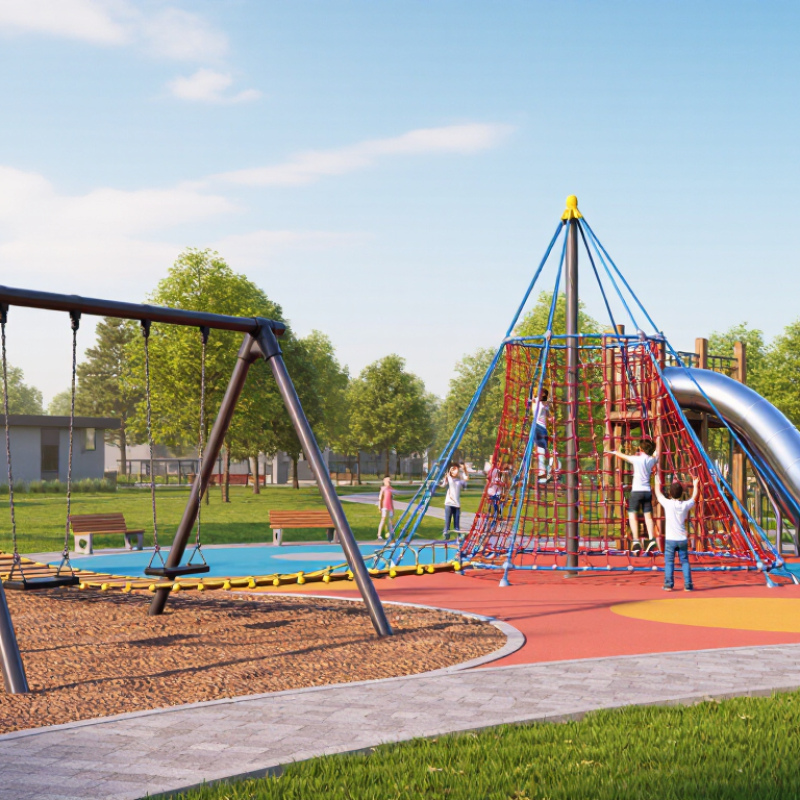
Understanding Non-Powered Amusement Equipment and Its Main Categories
Non-powered amusement equipment operates without motors or powered ride systems. Visitors create movement by climbing, swinging, balancing, or using gravity. Simple does not mean risk-free. Design depends on age range, expected use, available space, and the surface below.
Common categories include climbing frames, rope nets, slides, swings, and balance elements. Climbing structures may combine handholds, tunnels, and platforms at different heights. Rope courses challenge coordination, while low balance beams support younger users. Slides need clear run-outs and suitable approach platforms. Swings vary too: traditional seats encourage broad motion, while basket seats let several children sit together. Some play areas include trampolines or obstacle routes, though their layouts and supervision needs differ.
Materials shape maintenance and play. Galvanized steel handles outdoor exposure, while treated timber brings a warmer look but needs regular checks for wear and splinters. Plastic panels offer smooth surfaces, yet sunlight and heavy use can change them over time. Details matter. Check fasteners, moving joints, entrapment gaps, and impact-absorbing surfacing during routine inspections. A category name alone cannot confirm suitability; dimensions, installation quality, and site conditions also matter. Even a well-designed layout can feel awkward if paths cross or caregivers cannot see hidden corners. Easy to miss.
How Manufacturers Design and Produce Non-Powered Attractions
Non-powered attractions begin with a use plan, not a shape. Designers map children’s movement, sightlines, entry points, and likely crowding before developing climbing nets, slides, or balance features. They also consider age range, weather exposure, drainage, and how staff will inspect hidden joints. Small details matter. A smooth-looking edge can still create a pinch point when two moving parts meet.
The U.S. Consumer Product Safety Commission’s 2001–2008 playground-equipment study estimated 218,851 emergency-department-treated injuries each year among children under 18. The figure covers playground equipment broadly, not non-powered attractions alone, but it shows why fall height, impact-absorbing surfaces, and clear landing zones need early attention. Designers may use ASTM F1487 as a technical reference for public playground equipment, then adapt testing to the attraction’s actual layout and use.
Production turns drawings into inspectable parts. Fabricators check material thickness, weld quality, fasteners, coatings, and fit; prototype builds reveal awkward transitions that renderings can miss. Teams should test representative assemblies under expected loads and review surface performance after installation. Then test again. One weakness in the process is relying too heavily on a successful factory test: drainage, soil movement, and frequent use can change conditions on site. Manufacturers need clear inspection instructions, and operators need practical records of repairs and checks.
Key Criteria for Comparing Amusement Equipment Manufacturers
When comparing non-powered amusement equipment manufacturers, judge the whole process, not just the finished structure. Ask how each design suits its intended age range, play capacity, and site conditions. A climbing frame for a compact indoor space needs different clearances and surfaces from an outdoor rope course. Request layout drawings and confirm that operators can supervise key areas without blind spots.
Inspect the materials and their maintenance needs. Look for smooth edges, secure joints, weather-resistant finishes, and surfaces that drain rather than hold water. Ask what testing the manufacturer performs and request written inspection guidance. A polished brochure is not proof. Ask for project references, then speak with operators about installation delays, wear, and access to replacement parts. Their experience can reveal details a specification sheet misses.
Maintenance matters. Confirm which components need routine checks, how often they should be checked, and what tools are required. Compare warranty terms, but also ask how quickly service questions receive a response. A lower initial price may mean more upkeep; a higher one does not automatically mean better quality. I would weigh documented performance and practical support heavily, though site conditions can still complicate any comparison.
How to Select a Manufacturer for a Specific Project
Selecting a manufacturer for a specific non-powered amusement project starts with the site, not a catalog. Measure usable space, slopes, drainage, access routes, and the expected age range. A compact school courtyard needs different equipment from a public park with steady weekend traffic. Bring a simple site plan and photos; vague dimensions can lead to awkward layouts. Small details matter.
Ask how the manufacturer turns those conditions into a design. Request drawings that show fall zones, circulation paths, foundations, materials, and maintenance access. Confirm which components are included and which require local contractors. For a timber climbing structure, ask about finishes, water exposure, replacement parts, and inspection intervals. Get answers in writing. Clear records make proposals easier to compare.
Experience should be visible in past projects similar in scale and use, not only polished renderings. Ask for references, installation timelines, and examples of problems resolved after opening. Check that the documentation supports applicable safety standards, and have a qualified local professional review site-specific requirements. Price still matters, but the cheapest quote may omit groundwork or shipping. I would leave room for uncertainty: weather, soil, and user behavior rarely follow the drawing exactly.