What Are the Top Women's Golf Clubs for Global Buyers?
Choosing the right women's golf clubs can feel difficult when global buyers face different brands, budgets, climates, and playing conditions. A complete set may look attractive online, yet the wrong shaft length or grip size can reduce confidence on the course. Fit matters. Small details count.
This guide examines leading women's golf clubs through practical performance, build quality, forgiveness, comfort, and value. We consider lightweight graphite shafts, higher-lofted drivers, cavity-back irons, supportive hybrids, and putters designed for stable alignment. These features can help beginners launch the ball higher and make consistent contact. Experienced players may prefer more control, adjustable weighting, or a stronger feel at impact.
Our comparisons are based on manufacturer specifications, independent testing principles, golfer feedback, and the experience of fitting equipment for different swing speeds. We also consider shipping access, warranty clarity, replacement grips, and compatibility with regional purchasing needs. These details often matter after the first round.
No ranking is perfect. Personal fitting can change the result. A club that suits a tall golfer with a fast swing may feel uncomfortable for a shorter player with a slower tempo. Buyers should check shaft flex, lie angle, set composition, and return policies before ordering. Reviews can help, but they cannot replace a professional fitting session. The best choice balances performance, comfort, durability, and realistic expectations. That is not always the most expensive set.
Understanding Women’s Golf Club Design and Performance Needs
What Are the Top Women's Golf Clubs for Global Buyers?
Women’s golf club design should begin with performance needs, not color or decoration. The R&A’s 2024 Global Golf Participation Report recorded more than 66 million on-course golfers worldwide in 2023. This expanding market includes beginners, competitive players, and older golfers with changing strength levels.
Shaft weight, club length, lie angle, and grip size strongly affect control. Many women benefit from lighter shafts and higher lofts, especially when swing speed is moderate. However, “women’s flex” is not a universal measurement.
A player with a fast tempo may need a heavier, firmer shaft. A slower tempo may require easier launch. The label can mislead.
A fitting bay exposes the difference. Useful testing compares launch height, carry distance, dispersion, and impact consistency. The 2024 National Golf Foundation Golf Industry Overview reported 28.6 million U.S. on-course golfers in 2023, reflecting a large and diverse equipment market.
Global buyers should also consider climate and course conditions. Softer fairways may reward different sole designs than firm links courses.
Grip diameter deserves attention. Smaller hands can lose control with oversized grips, while arthritic hands may need softer materials.
Sound matters too. Some players prefer a muted impact, while others want clear feedback. Data helps, but it is imperfect. Personal testing still matters.
Key Club Types in a Complete Women’s Golf Set
Choosing women’s golf clubs starts with the right club mix, not a fashionable appearance. The R&A’s Golf Around the World 2023 report recorded 66.6 million golfers across 206 countries. That global audience includes different swing speeds, course conditions, and fitting needs.
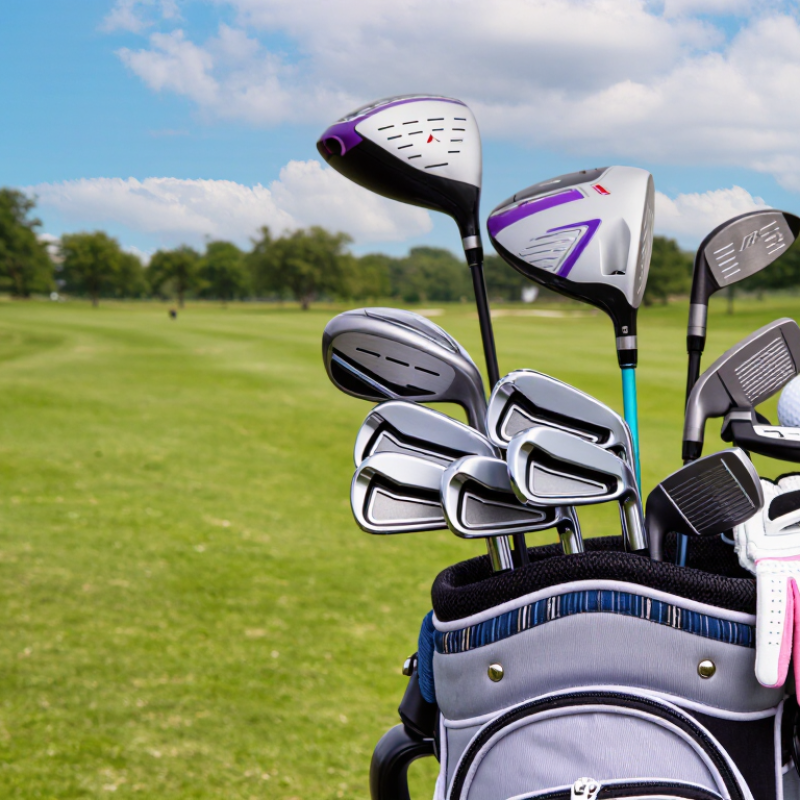
A complete women’s golf set usually includes a driver, fairway wood, hybrid, irons, wedges, and a putter. A higher-lofted driver can help launch the ball from the tee. Fairway woods provide useful distance from clean lies. Hybrids often replace longer irons and feel easier from rough. Irons should offer consistent distance gaps, such as 10–15 yards between clubs. Wedges then control short approaches, bunkers, and delicate chips. Golf Datatech’s U.S. retail reports consistently show strong demand for equipment fitting and replacement purchases, but one detail is often missed: women’s clubs should not be selected only by gender. Height, wrist-to-floor measurement, ball speed, and impact pattern matter more. A lighter shaft may help some players, but not every player. That assumption deserves questioning.
Tips: Test several shaft weights and lofts on a launch monitor. Check carry distance, not total distance. Keep the club that produces repeatable contact. For global buyers, compare metric and imperial specifications carefully. A 5-degree loft gap can create an awkward distance hole. Also inspect local fitting support, warranty terms, and return policies. The NGF reported 28.1 million U.S. on-course golfers in 2023, showing why accessible, properly fitted equipment remains commercially important. Still, a perfect chart cannot replace ten real swings.
What Are the Top Women's Golf Clubs for Global Buyers? - Key Club Types in a Complete Women’s Golf Set
Loft ranges are typical market specifications rather than fixed standards. Actual loft, length, lie angle, shaft weight, and flex vary by model and fitting system.
Top Features to Compare Across Global Golf Club Brands
Global buyers should compare women’s golf clubs by measurable fit, not color or advertising. The R&A’s Golf Around the World 2023 report recorded more than 66 million on-course golfers outside the United States. That broad market includes different swing speeds, climates, and course conditions. Loft options matter because stronger lofts can reduce launch height. Shaft weight and flex influence tempo, comfort, and control. A lighter club may help some players, but not everyone.
Forgiveness deserves careful testing. Higher moment of inertia can reduce twisting on off-center strikes, while adjustable hosels may refine launch and direction. However, more adjustment does not guarantee better performance. Check lie angle, grip size, club length, and head balance. The USGA and R&A Distance Insights Report found that hitting distances continue to increase, but distance alone is an incomplete buying measure. Consistent gapping between clubs often saves more strokes than a single longer shot. A perfect specification sheet can still feel wrong.
Tips: Ask for launch-monitor results, including carry distance, peak height, dispersion, and spin. Test clubs with your real golf ball. Compare several shaft weights. Review warranty coverage, fitting support, replacement availability, and import duties before ordering. The 2024 Golf Datatech Equipment Buying Trends report also shows that golfers increasingly research equipment before purchase, yet online specifications can hide important fit differences. I once overvalued lightness; stability mattered more. Leave room for that mistake.
What Are the Top Women's Golf Clubs for Global Buyers?
Typical loft ranges are useful when comparing women's golf clubs across international markets. Higher-lofted woods, hybrids, and irons can help many recreational players achieve easier launch and more consistent distance.
The chart uses common market specification ranges rather than brand-specific data. When comparing clubs, buyers should also review shaft weight and flex, club length, forgiveness, grip size, loft gapping, and overall set composition.
How to Match Clubs with Skill Level, Swing, and Course Style
Global buyers should choose clubs by delivery, not gender labels. The R&A’s Golf Around the World 2023 report counted 66.6 million golfers across 206 countries. Its scale shows why one women’s specification cannot suit every player. A beginner with a slow, inconsistent swing may need lighter clubs, shorter length, and generous perimeter weighting. An experienced player may need heavier shafts, tighter distance gaps, and a controlled face. Those are fitting decisions, not marketing assumptions.
Match the set to swing speed, strike pattern, and typical miss. The National Golf Foundation reported 28.1 million U.S. on-course golfers in 2023, with women representing about one quarter. That participation base includes beginners, competitive amateurs, and occasional holiday golfers. A high-launch hybrid can replace a difficult long iron for many developing players. Fairway woods suit sweeping swings and soft turf. On firm, windy links, lower-launching irons and a stable driver can improve control. Narrow, tree-lined courses reward accuracy over maximum distance. Gapping matters more than one impressive carry number.
Tips: Test clubs with a launch monitor and record carry, launch height, and dispersion. Ask for two shaft weights, not one prescribed flex. Check lie angle and grip size, too. Real fittings often reveal an uncomfortable truth: fewer clubs may create better distance gaps. That feels less satisfying, but it can produce better scores.