
Choosing the right women's golf clubs can make the course feel more manageable, especially when a long approach or uneven lie tests your confidence. Yet no club can fix every swing. Fit, practice, and comfort still matter. A set that looks impressive online may feel too heavy after nine holes.
This guide explores ten women's golf club options for golfers at different skill levels, from beginners learning consistent contact to experienced players seeking more control. It considers practical details such as club weight, forgiveness, shaft flex, set composition, and how easily each club launches the ball. These factors can help narrow the search, but they are not guarantees. A lighter shaft, for example, may suit one golfer and feel unstable to another.
Real fit matters. If possible, try clubs at a retailer or ask a qualified fitter to check your height, swing, and preferred ball flight. Pay attention to the grip in your hands and the clubhead through impact—not just the product description. Some golfers may need only a few clubs, while others prefer a complete set. That distinction is easy to overlook. The selections ahead aim to offer a useful starting point, not a perfect answer for every player. Your best choice may take a little testing.
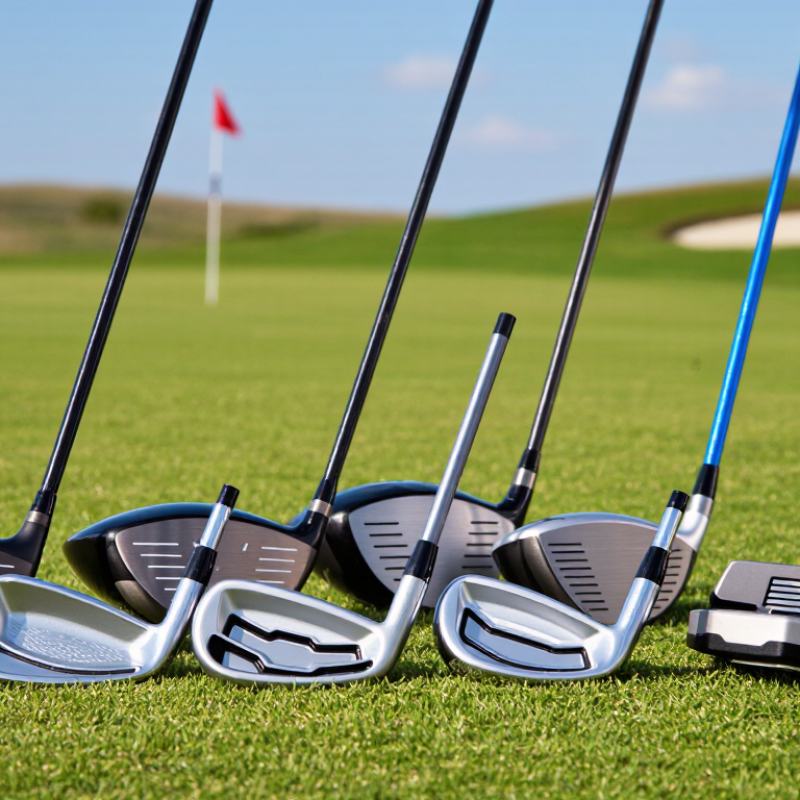
Women’s golf clubs are not simply shorter versions of men’s sets. Designers often adjust shaft length, weight, grip size, and clubhead balance to suit common fit needs. But golfers vary widely, so labels alone cannot tell you whether a club will feel right. A compact grip should sit comfortably in your fingers, not force your hands to squeeze. Fit matters.
Shaft flexibility and total weight can influence how easily a golfer loads the club and controls its swing. A lighter setup may help some players create speed, while others prefer a heavier feel for steadier contact. More loft on a driver can help launch the ball higher, though the best choice depends on swing speed and strike pattern. A fitting session can reveal more than a specification chart.
Clubhead design also changes performance. A larger, perimeter-weighted head can make off-center strikes less punishing, while a compact head may offer a different feel and shape at impact. Hybrids can replace harder-to-hit long irons for golfers who need more height from the fairway. Still, no design fixes every miss. I’d compare a few options on real turf, not only a mat; that detail is easy to overlook. Try several swings.
| Rank | Club or Set Type | Best Suited To | Common Design Features | Typical Loft or Setup | Performance Strength | What to Check Before Choosing |
|---|---|---|---|---|---|---|
| 1 | Beginner complete set | New golfers and occasional players | Usually includes a driver, fairway wood, hybrid, irons, wedges, and putter; often offered with lighter shafts and shorter standard lengths than some men’s sets. | Driver commonly about 10.5°–13°; set makeup varies by manufacturer and may replace long irons with hybrids. | Provides a convenient, balanced selection of clubs without requiring separate purchases. | Check the actual club count, included lofts, shaft material, length, and whether the set is available for left-handed players. |
| 2 | High-loft driver | Beginners and golfers seeking easier launch | Large head and perimeter weighting are common; lighter overall construction may help some players generate speed. | Many drivers offer adjustable loft; approximately 11°–14° is a common higher-loft range. | A higher launch can help players with slower swing speeds carry the ball farther, depending on strike and delivery. | Choose loft and shaft flex based on launch, spin, strike pattern, and fitting results—not gender alone. |
| 3 | Fairway wood | Beginners through intermediate players | Shallow-faced heads and sole weighting can make launch from the turf more manageable than with a low-lofted long iron. | A 5-wood is often around 18°; a 7-wood is commonly around 21°. | Offers a useful option for longer shots from the fairway or light rough. | Compare carry distance with the longest hybrid and shortest iron to avoid overlapping yardages. |
| 4 | Rescue hybrid | Golfers who struggle with long irons | Combines a compact, wood-like head with a shorter shaft than many fairway woods; many models use a wide sole. | Common lofts range from about 18° to 28°, depending on the number and intended distance. | Can be easier to launch than a comparable long iron and useful from several lies. | Test turf interaction and distance consistency; hybrid designs differ in offset, head size, and draw bias. |
| 5 | Forgiving cavity-back irons | High-handicap and improving players | Perimeter weighting and a larger cavity-back profile help maintain performance on some off-center strikes. | Iron lofts vary widely; compare the loft chart rather than relying on the number stamped on each club. | Generally prioritizes forgiveness and launch over workability. | Check sole width, offset, lie angle, and gapping; a fitting can identify length and lie needs. |
| 6 | Lightweight graphite-shaft iron set | Players who prefer a lighter-feeling setup | Graphite shafts are generally lighter than many steel alternatives, though actual weight and flex vary considerably. | Available across a broad range of iron lofts and flex profiles. | A lighter shaft may help some golfers increase clubhead speed or reduce effort, but results are individual. | Compare shaft weight, flex, torque, and dispersion; graphite is not automatically the right choice for every woman. |
| 7 | Hybrid-and-iron combo set | Intermediate players wanting easier long-club options | Uses hybrids in place of selected long irons while retaining irons for shorter approach shots. | Set composition varies; lofts should form consistent distance gaps from the longest hybrid through the wedges. | Can make long approaches more manageable while preserving iron control closer to the green. | Map carry distances for every club and confirm there are no large gaps or unnecessary overlaps. |
| 8 | Game-improvement iron set | Mid-handicap golfers seeking a mix of help and control | Often features a cavity-back construction, moderate sole width, and design elements intended to support launch and stability. | Loft and head design differ by model; compare measured carry distances rather than loft labels alone. | Balances some off-center-hit assistance with more shot control than many oversized designs. | Test both distance consistency and left-to-right dispersion; stronger lofts can affect wedge gaps. |
| 9 | Wedge selection for short-game gapping | All skill levels, especially players refining approach distances | Wedges come in different lofts, sole grinds, and bounce angles to suit shots and turf conditions. | Pitching wedges are often about 42°–48°; gap, sand, and lob wedges commonly span roughly 48°–64°. | Fills distance gaps and provides options for pitches, chips, bunker shots, and higher-lofted shots. | Choose lofts from the actual pitching-wedge loft and consider course conditions, technique, and bunker sand. |
| 10 | Fitted putter | Every golfer, from beginner to advanced | Head shape, alignment features, grip size, and shaft position vary; length should suit posture and setup. | Many putters are sold in lengths around 32–36 inches, with custom lengths also available. | A comfortable fit can support repeatable alignment, posture, and stroke mechanics. | Test eye position, face alignment, grip comfort, and distance control; a shorter or longer putter is not automatically better. |
Note: These are general club categories and typical design ranges, not universal specifications. Women's clubs are not defined by one standard build: suitable length, shaft weight and flex, grip size, lie angle, and clubhead design depend on a golfer's height, strength, swing, and preferences. A fitting and on-course testing are the best ways to compare options.




The Presidio Golf Course is
a Presidio Trust Initiative.