Choosing the right putter can change more than your scorecard. It can change how you stand over a three-foot putt.
The National Golf Foundation’s 2024 Golf Industry Overview reported 26.6 million on-course golfers in the United States during 2023. That large player base includes beginners, competitive amateurs, and experienced golfers seeking better consistency. Golf Datatech also tracks putters as a distinct equipment category in its retail reports, reflecting their importance in the modern club market. Yet more choice does not always create better decisions.
Dave Stockton, a two-time major champion and respected putting teacher, wrote, “Putting is a game of confidence.” That idea remains practical. A face-balanced putter may calm a golfer with a straight stroke, while moderate toe hang may suit someone with a visible arc. Length, lie angle, loft, grip size, alignment lines, and head weight also affect performance. So does the green beneath your feet.
A putter should feel stable at address. It should return naturally, not fight your hands.
This guide explains how to compare designs, test distance control, and recognize your stroke pattern. It also considers launch monitors, fitting sessions, and real practice results. Still, no fitting method is perfect. A putter that performs well indoors may feel different on wet, fast greens. That detail is easy to overlook. Test carefully, question the first impression, and choose the club that produces repeatable confidence.
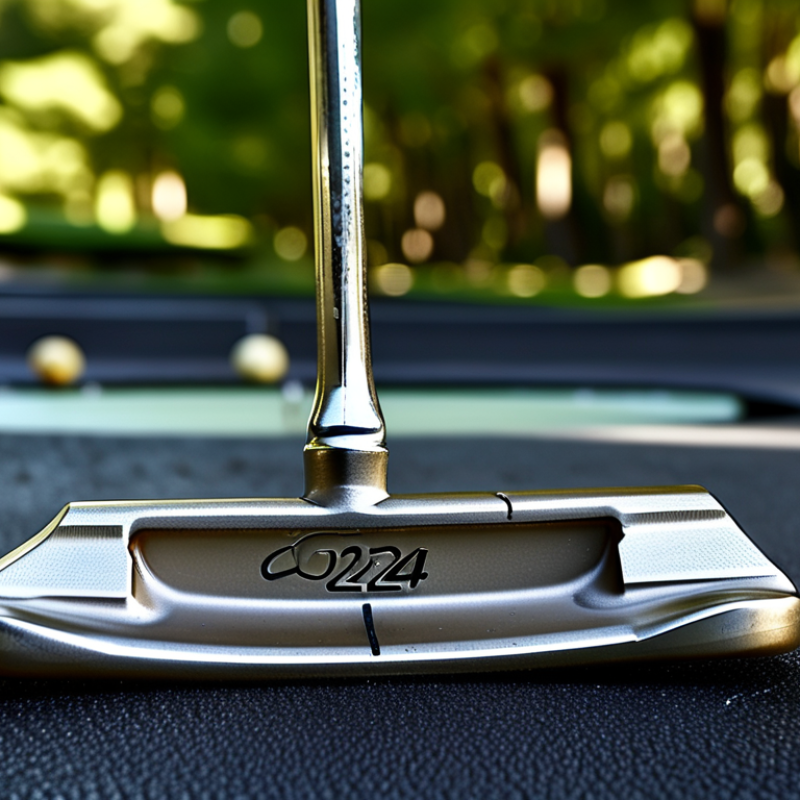
A putter influences distance control, alignment, and confidence on the green. Its length affects posture, while its lie angle changes how the face meets the ball. A putter that sits flat may push the ball right. One that stands too upright can pull it left. These small differences become obvious beside a three-metre putt.
Your stroke also matters. Golfers with a straight-back, straight-through motion may prefer balanced weight distribution. Those with a noticeable arc may feel more comfortable with slight toe balance. Face design affects sound and feedback, helping you judge whether contact was centered. Yet technical features cannot replace practice. I once focused too much on appearance and ignored distance control. That choice looked good but performed poorly.
Tips: Test several putters from the same distance. Watch the starting line and stopping point. Check whether your eyes sit comfortably over the ball. Make ten putts with each option, then compare results rather than memory. Grip pressure should stay light. Feel is personal. Also, test on fast and slow greens when possible. A putter may feel perfect indoors but behave differently outdoors. Ask a qualified fitter to measure your stroke, length, lie, and loft. Measurements add useful evidence, although they should support your judgment, not replace it.
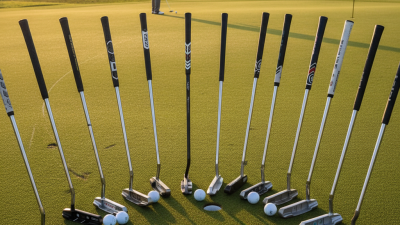
Choosing the right putter begins with understanding your putting stroke and alignment needs. Watch your putter face during short practice strokes. Does it stay square, or does it open and close naturally? A face-balanced design often suits a straighter stroke. A toe-weighted design may feel better for players with noticeable rotation. These are useful guidelines, not strict rules.
Stand over a five-foot putt and place two alignment rods beside your target line. Check whether your eyes sit directly above the ball. Some golfers aim left without noticing it. Others aim right because their dominant eye influences their view. Try different head shapes and sightlines, then compare where the ball actually starts. Starting direction matters more than a smooth-looking swing.
Your grip pressure also affects alignment. Hold the handle gently, about the pressure used to carry a small paper cup. Too much tension can pull the face offline. I once changed putters because my misses looked embarrassing, but the real problem was inconsistent setup. That mistake still matters. Record ten putts from six feet, noting face angle, start line, and distance control. A fitting session with a qualified professional can reveal patterns you may miss alone. Test on a real grass surface when possible, because indoor mats can hide small alignment errors. Feel matters, but evidence should guide the final choice.
Choosing the right putter begins with head shape, not appearance. Blade heads suit players with a pronounced arc and consistent face rotation. Mallets usually offer higher moment of inertia, helping reduce twisting on off-center strikes. Mid-mallets sit between both options. They can feel stable without looking oversized. PGA TOUR ShotLink data from 2024 places elite putting near 1.7 putts per hole, but amateur results vary widely. Shape alone cannot create that control.
Weight changes tempo, contact, and distance perception. A heavier head may steady a quick stroke, especially on fast greens. A lighter head can improve feedback for players who rely on touch. Face-balanced designs generally match straighter strokes, while toe-hang designs support more rotation. Not always. A counterbalanced setup can calm the hands, yet it may make short putts feel disconnected. During fittings, I sometimes chase stability and lose useful feedback. That mistake deserves attention.
Test each head from five, ten, and thirty feet. Record start direction, pace, and face contact. Do not judge one perfect putt. The independent 2024 Most Wanted putter testing report used more than 10,000 putts and found performance differences between testers, rather than one universal winner. Golf Datatech’s 2024 equipment market report also shows strong consumer demand for equipment customization, but demand is not proof of better scoring. Select the shape that repeats your stroke under pressure, then adjust weight and balance around that evidence.
Comparing Putter Head Shapes, Weights, and Balance
How to read the chart: Blades are typically lighter and often feature moderate-to-strong toe hang, which can suit golfers with a pronounced arcing stroke. Mid-mallets provide a balance between traditional feedback and added stability. Full mallets are usually heavier and commonly face-balanced or designed with minimal toe hang, making them a popular choice for straighter putting strokes.
Important: The weight figures represent typical head-weight ranges found across mainstream putter designs. Actual specifications vary by model, shaft length, grip, counterweighting, and fitting adjustments.
How to Choose the Right Putter for Your Golf Game?
Choosing a putter starts with the face, not its appearance. A face-balanced head usually suits a straighter stroke. Toe hang can help golfers with noticeable arc. Watch the sole, too. It should sit flat when your hands rest naturally. I once chose a face pattern for its feel alone. My distance control became inconsistent. That mistake still influences my fittings. Recent PGA TOUR ShotLink statistics show players make roughly 80% of five-foot putts, but only about 40% from ten feet. Small face errors become expensive quickly.
Length changes your posture, eye position, and contact point. Stand naturally, then let your arms hang freely. The putter should reach your hands without forcing your elbows inward. A fitter can check whether your eyes sit over, inside, or beyond the target line. There is no universal “correct” position. Golf Datatech’s 2024 U.S. Golf Equipment Report tracks putters as a major equipment category, reflecting how seriously golfers treat this choice. Grip size matters equally. A thicker grip can quiet active wrists, while a thinner grip may improve touch. Test both. Hit ten short putts, then ten from thirty feet. Record results, not impressions. Be honest about misses. A softer face may feel pleasant, yet it can leave long putts short. Your ideal combination is the one that produces repeatable speed and a square return, even when your stroke is imperfect.
| Player Profile or Need | Recommended Putter Face | Typical Face Feel and Roll | Recommended Length | Recommended Grip | Why This Combination Works |
|---|---|---|---|---|---|
| Players who prefer a softer impact | Polymer insert or elastomer-covered face | Soft sound and reduced vibration; generally suited to golfers who prefer a muted response | 33–35 in | Standard or lightly tapered grip | Provides a comfortable feel while maintaining enough feedback to judge distance on medium and long putts. |
| Players who want clear feedback | Milled metal face with a shallow or fine pattern | Firmer impact sensation and more audible feedback; useful for evaluating strike quality | 33–35 in | Standard-size grip | The firmer face helps distinguish centered strikes from heel or toe contact, supporting more consistent practice. |
| Players seeking a balanced feel | Metal face with moderate grooves or a textured pattern | Middle-ground sound, feel, and ball-roll response | 33–35 in | Standard or midsize grip | A versatile option for golfers who do not want an especially soft or especially firm putting sensation. |
| Golfers with a straight-back-and-through stroke | Face-balanced mallet or face-balanced blade | Stable head response with limited toe rotation | 33–35 in | Midsize grip for added stability | Face-balanced designs generally suit strokes with minimal natural opening and closing of the putter face. |
| Golfers with a slight arc in the stroke | Moderate toe-hang putter with a patterned or milled face | Responsive head rotation with clear strike feedback | 33–35 in | Standard or midsize grip | Moderate toe hang can complement a stroke in which the putter face naturally opens during the backswing and closes through impact. |
| Golfers with a pronounced arc | Greater toe-hang blade or compact mallet | More noticeable release and rotation through the stroke | 33–34 in | Standard grip to preserve hand feedback | The additional toe hang can better match a strong arc, provided the player can return the face squarely at impact. |
| Players who struggle with directional consistency | High-MOI mallet with alignment aids and a stable face construction | Stable response on off-center strikes; usually produces less twisting than a compact blade | 34–35 in | Midsize or larger non-tapered grip | A larger head and higher resistance to twisting can help maintain the starting direction when contact is not perfectly centered. |
| Players who struggle with distance control | Face material and pattern that provide noticeable strike feedback | Clear changes in sound and feel across different impact locations | 33–34 in | Standard grip with moderate taper | More feedback can help the player connect stroke length and impact quality with the distance the ball travels. |
| Golfers who stand very close to the ball | Compact blade or small mallet with a clean topline | Direct visual connection between the face, ball, and target line | 32–33 in | Standard grip | A shorter length may help the golfer maintain a comfortable posture without excessive hand or arm tension. |
| Taller golfers or players who bend less at address | Stable mallet or blade selected after a posture check | Depends on face material; head stability should be matched to the player’s stroke | 35–36 in | Midsize grip if extra hand stability is desired | A longer putter can support a more upright setup, but the correct length should allow the eyes and shoulders to sit comfortably over the intended line. |
| Players who use excessive hand action | Face-balanced mallet with a stable head | Consistent face orientation with reduced reliance on active wrist rotation | 34–35 in | Midsize or oversized grip | A larger grip can reduce excessive hand movement, while a stable head can make the stroke feel more controlled. |
| Players who prefer maximum hand feedback | Firm milled metal face with minimal cushioning | Distinct impact sensation and stronger sound feedback | 33–34 in | Thin or standard grip | Less grip material and a firmer face preserve more information about strike location and impact quality. |
Testing putter performance should begin on the practice green, not beside a retail display. I test three distances: six, ten, and thirty feet. Each distance exposes a different weakness. Short putts reveal face control. Long putts reveal speed judgment. Use ten attempts from each station, recording both distance and direction from the hole. PGA TOUR ShotLink putting statistics show that small differences in make percentage become meaningful across thousands of putts. Your personal pattern matters more than a single successful roll.
I also test impact consistency with a launch monitor or impact tape. Check face angle, strike location, launch, and skid distance. The USGA and R&A Equipment Rules confirm that putter design must meet specific dimensional and performance limits, but legal does not mean suitable. A high-stability head may reduce twisting, while a compact head can provide clearer alignment feedback. That choice depends on your stroke, not fashion.
My first test was flawed. I changed grips between sessions and trusted memory instead of measurements. Do not repeat that mistake. Keep the same ball, green, routine, and target. Test under pressure, too. Misses matter. A putter that performs well during quiet practice may feel different over a two-meter putt for par. Record results after several sessions, then choose the model that produces repeatable speed and confidence, even if its numbers are not perfect.
Presidio Golf Course
300 Finley Road @ Arguello Gate
San Francisco 94129
P: 415.561.4661
MAP IT